
➜ Patios
Patios IN Sauk Rapids, MN
A paver patio wants at least 6 inches of compacted class 5 beneath it and a pitch of about an eighth of an inch per foot to shed water. Complete Yard Care Company builds patios in Sauk Rapids, MN to those numbers, in paver, poured concrete and in natural stone, for homes and businesses throughout Foley, Sartell and Benton County.
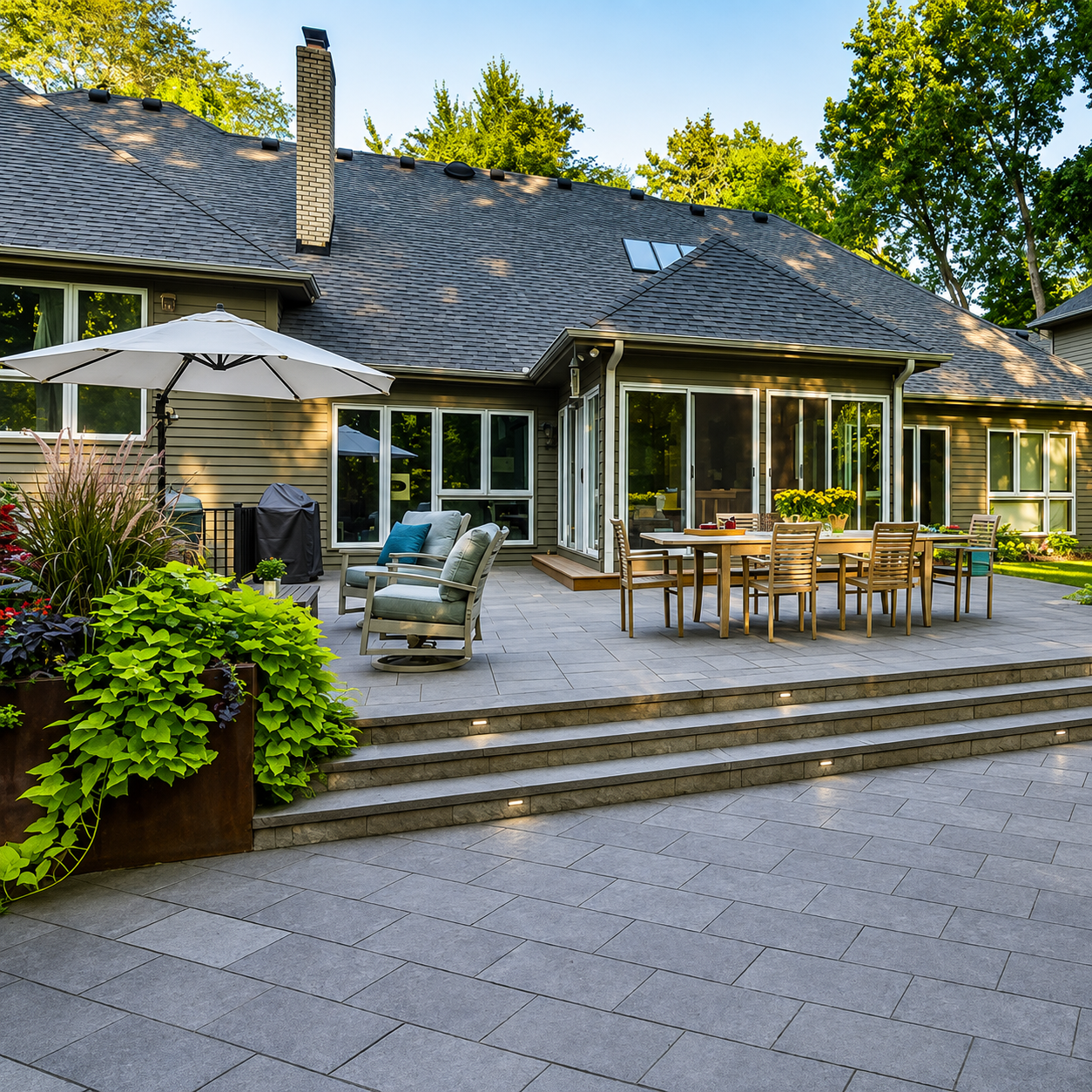
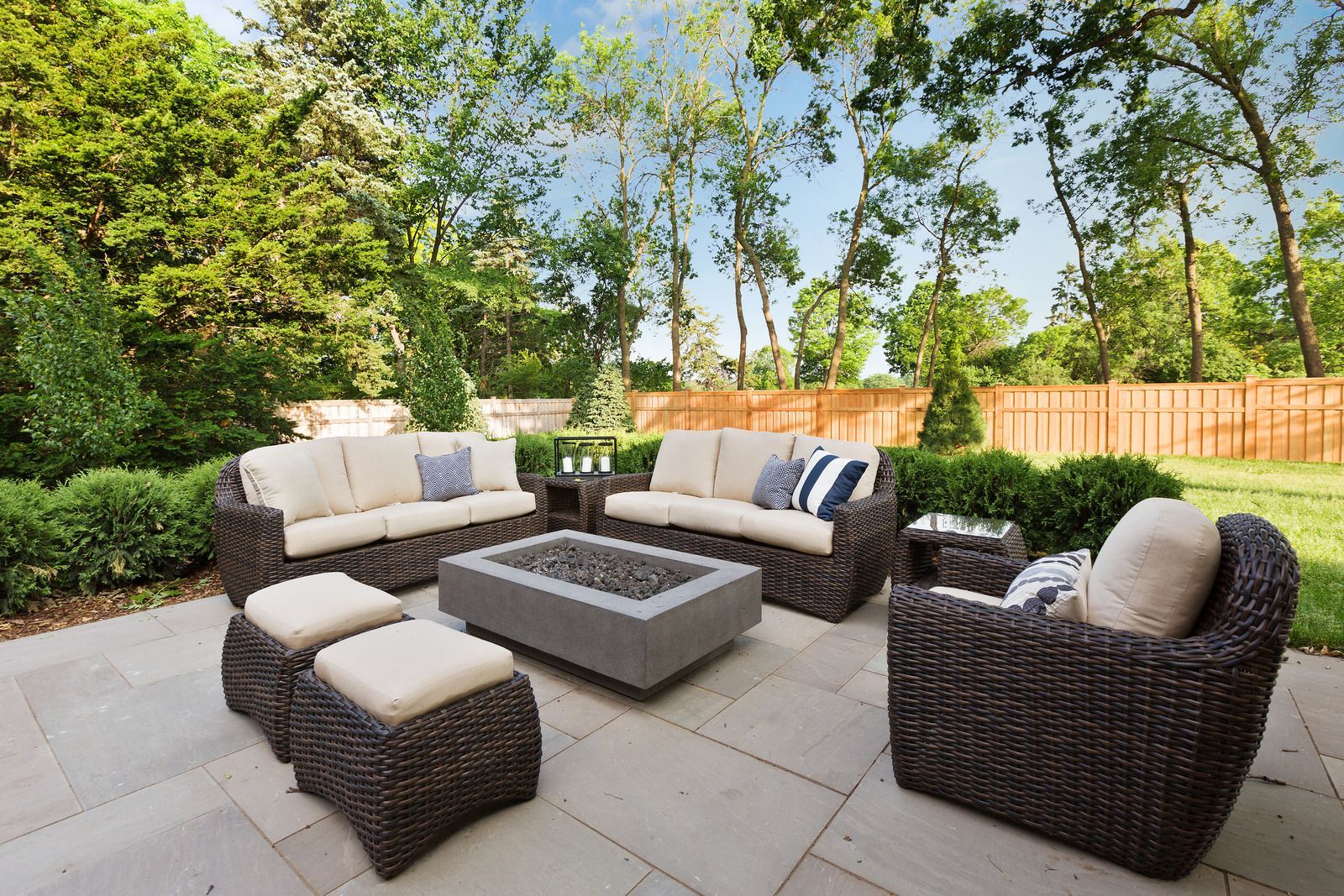
PATIOS ARE MOSTLY GRAVEL WITH A NICE TOP.
The stone you choose is the smallest decision on the whole project. What decides whether the surface is still flat in 10 years is the excavation depth, the quality of the aggregate, how many lifts it was compacted in, and whether water can get out from underneath. We spend most of a patio build below the finished elevation, which is exactly why the finished elevation stays put.
Pitch matters just as much. A patio built dead level holds a sheet of water after every rain and turns into a skating rink the first week of December.
- Six-inch compacted base as a minimum
- Pitch built in to shed water away
- Edge restraint before jointing sand
- Polymeric sand locking every joint
➜ PATIOS
THE SIZE PEOPLE REGRET IS ALWAYS TOO SMALL.
The most common patio complaint has nothing to do with materials. It is that the table and chairs fit, barely, and nobody can push a chair back without hitting grass. A dining set needs roughly 3 feet of clearance behind every seat, and a fire pit circle needs more. We stake the real footprint on the ground and put the furniture on it before quoting, because the difference between comfortable and cramped is usually only a few feet of stone.
FREEZE AND THAW DECIDE HOW A PATIO GETS BUILT.
Freeze and thaw cycles here work on a patio from both directions, lifting it in spring and settling it in fall. That is why the base gets built to drain rather than to hold, with clean aggregate and an outlet where the grade allows one. On clay lots we go deeper and add drainage stone. On sand we focus on edge restraint and compaction. The material on top is your choice, but the assembly underneath is dictated by the soil.
BAD BASES ALL LOOK OBVIOUS BY APRIL.
A fair share of our patio work across 20 years has been rebuilding somebody else's. The pattern almost never varies: 2 inches of sand over undisturbed topsoil, no edge restraint, no pitch, and a low corner where water sat all winter. Once you have pulled a few of those apart, you stop being tempted to save half a day on excavation. Would you rather pay for the base once, or pay for the patio twice?
WHAT A WELL-BUILT PATIO DELIVERS
A SURFACE THAT STAYS LEVEL
Correct base depth and compaction stop the settling and heaving that opens joints and tips furniture. The patio you walk out onto in year 10 sits where it was built.
WATER THAT RUNS OFF, NOT IN
Built-in pitch carries rain away from the house and off the surface. No standing puddles in summer, and no sheet of ice against the door in winter.
ROOM TO ACTUALLY ENTERTAIN
Sized around real furniture and real circulation, a patio stops being decorative overflow and becomes the space where people eat, sit and stay through an evening.
JOINTS THAT STAY TIGHT
Edge restraint and polymeric sand keep pavers locked together instead of drifting apart. Fewer weeds, fewer ants and no annual resetting of the outside course.
LIVING SPACE WITHOUT AN ADDITION
Square footage outdoors costs a fraction of square footage indoors. For several months a year it functions as another room, at a small share of the price.
A REPAIRABLE SURFACE
Individual pavers can be lifted and reset if something ever moves or stains. That is a repair nobody can make to a cracked slab of poured concrete.
➜ WHAT WE BUILD
OUR PATIO WORK
Every patio here is built from the excavation up, whatever material sits on top. These are the patio projects we take on for homes and commercial properties right throughout the area, in every material.
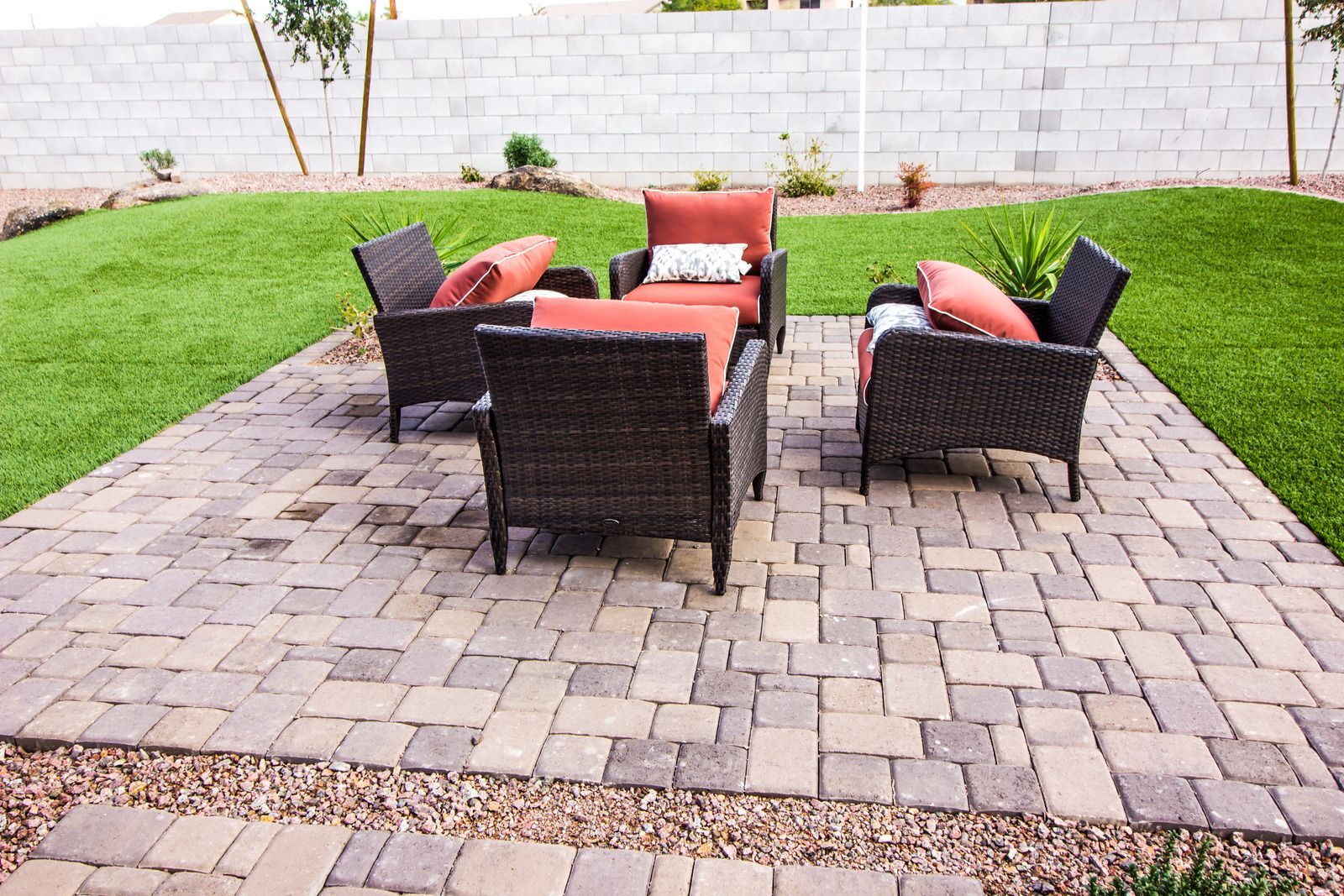
INTERLOCK
Paver Patios
Concrete pavers in the pattern, color and format you choose, set on compacted base with edge restraint and polymeric joints. Individual units can be lifted and reset later, which no poured surface allows.
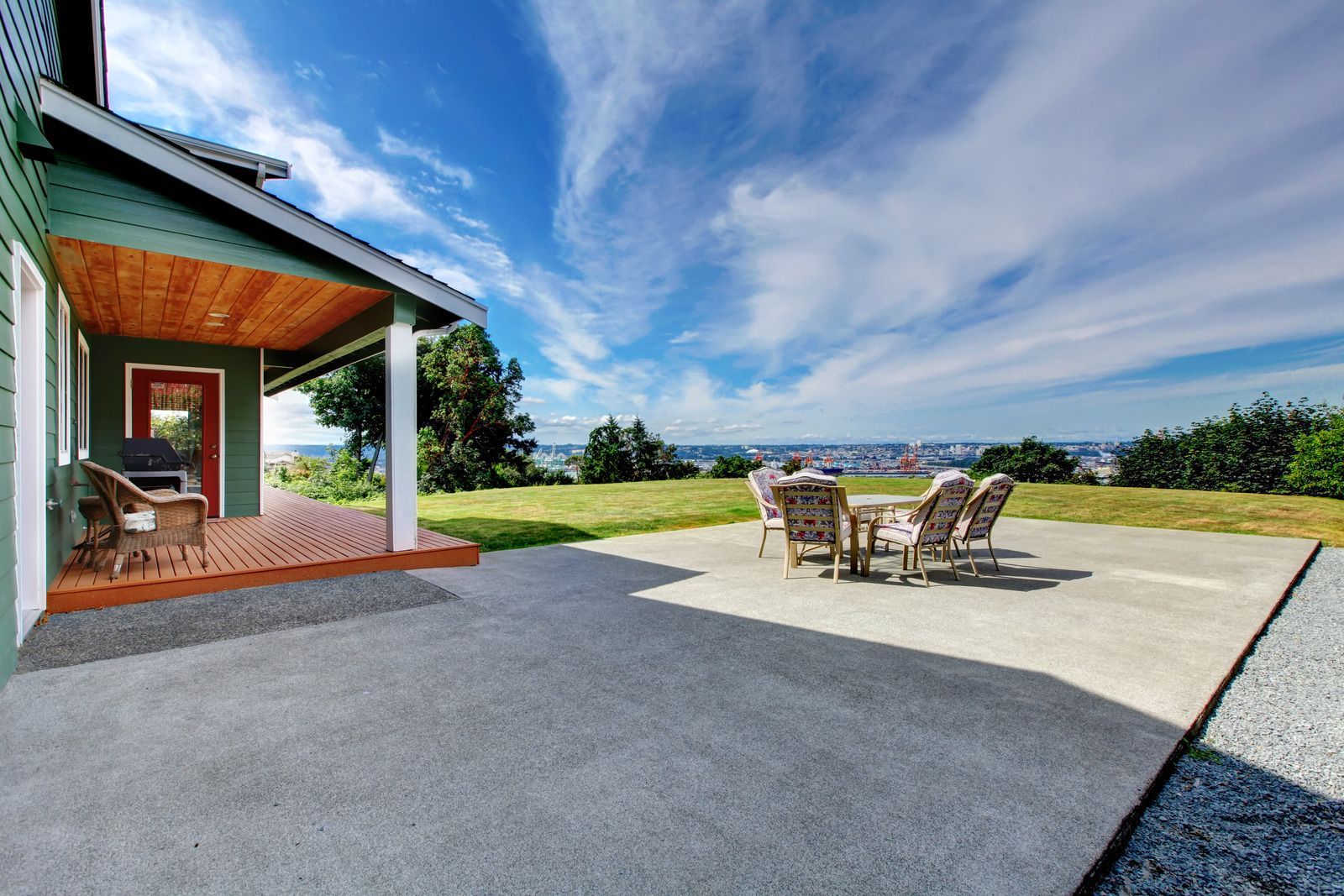
POURED
Concrete Patios
Formed and poured slabs with proper thickness, reinforcement and control joints placed where cracking wants to happen anyway. Broom, exposed aggregate and stamped finishes are all available depending on the look.
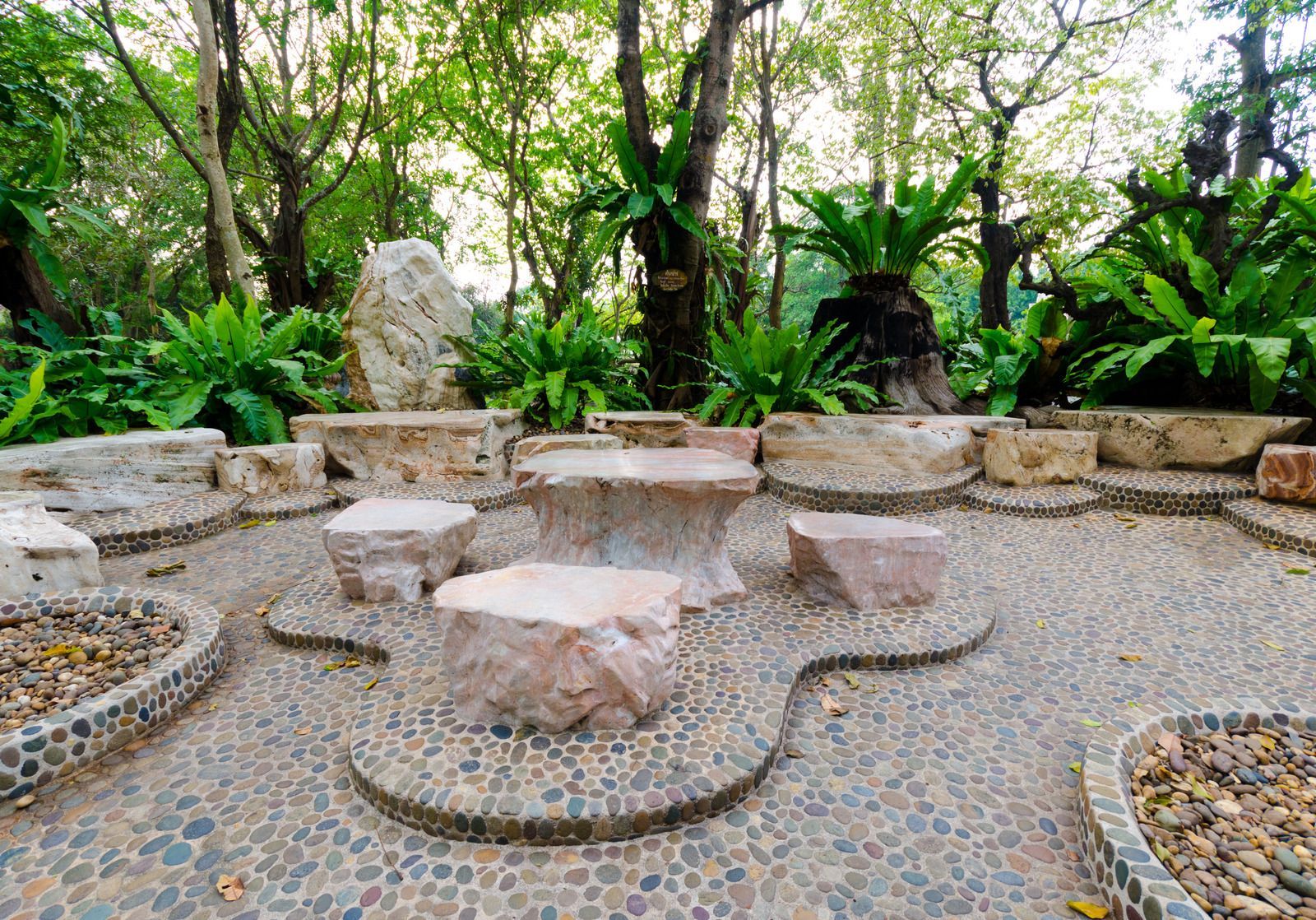
QUARRIED
Natural Stone Patios
Flagstone and cut stone laid on base or set in a mortar bed, depending on the material and the use. Every piece is different, so layout takes longer and the finished surface never repeats itself.
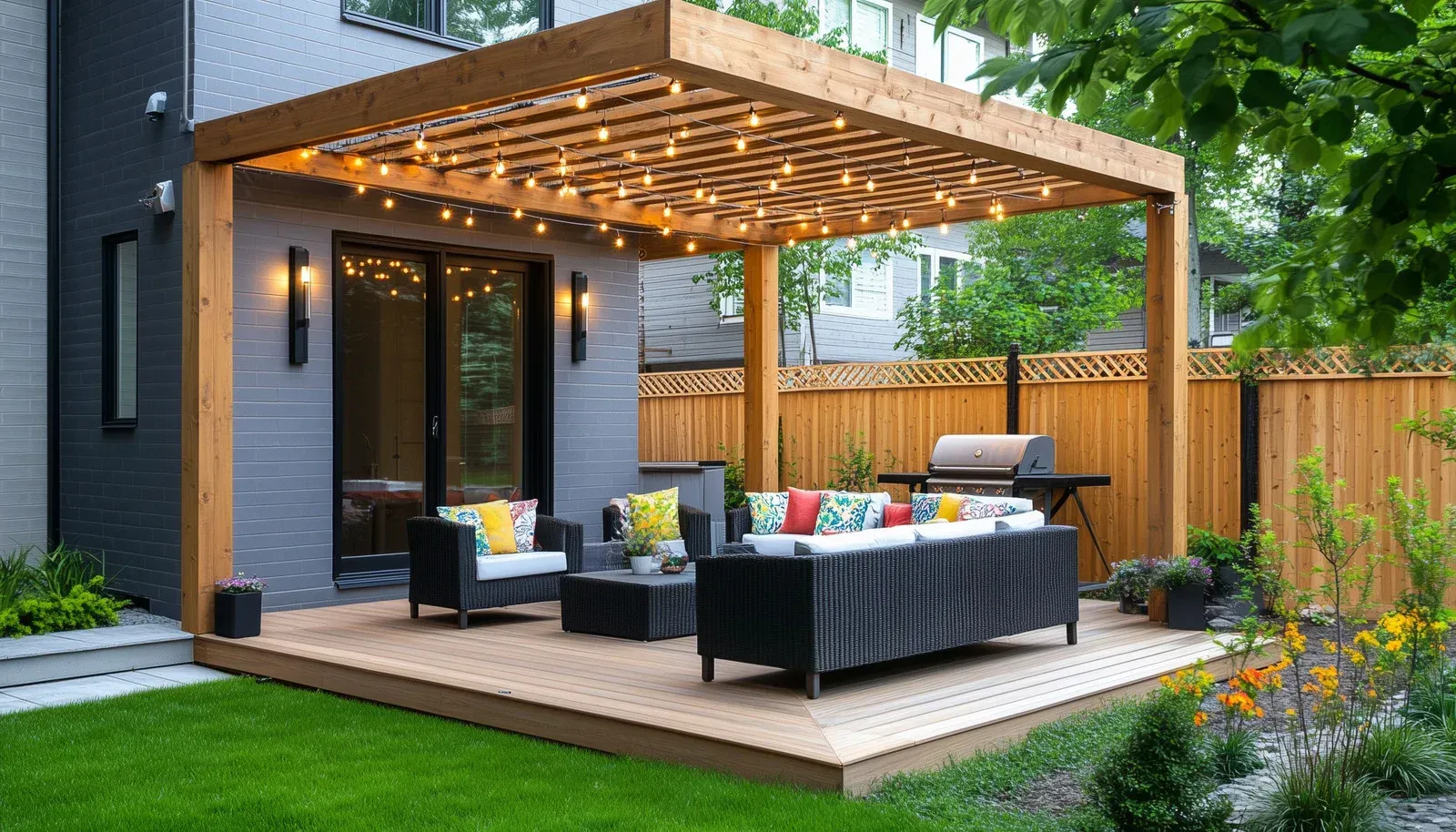
MORE ROOM
Patio Extensions And Resets
Existing patios enlarged, relaid or rebuilt where settlement, heaving or a failed base has taken over. Where the original stone is sound, it gets reused so the addition matches without hunting a discontinued product.
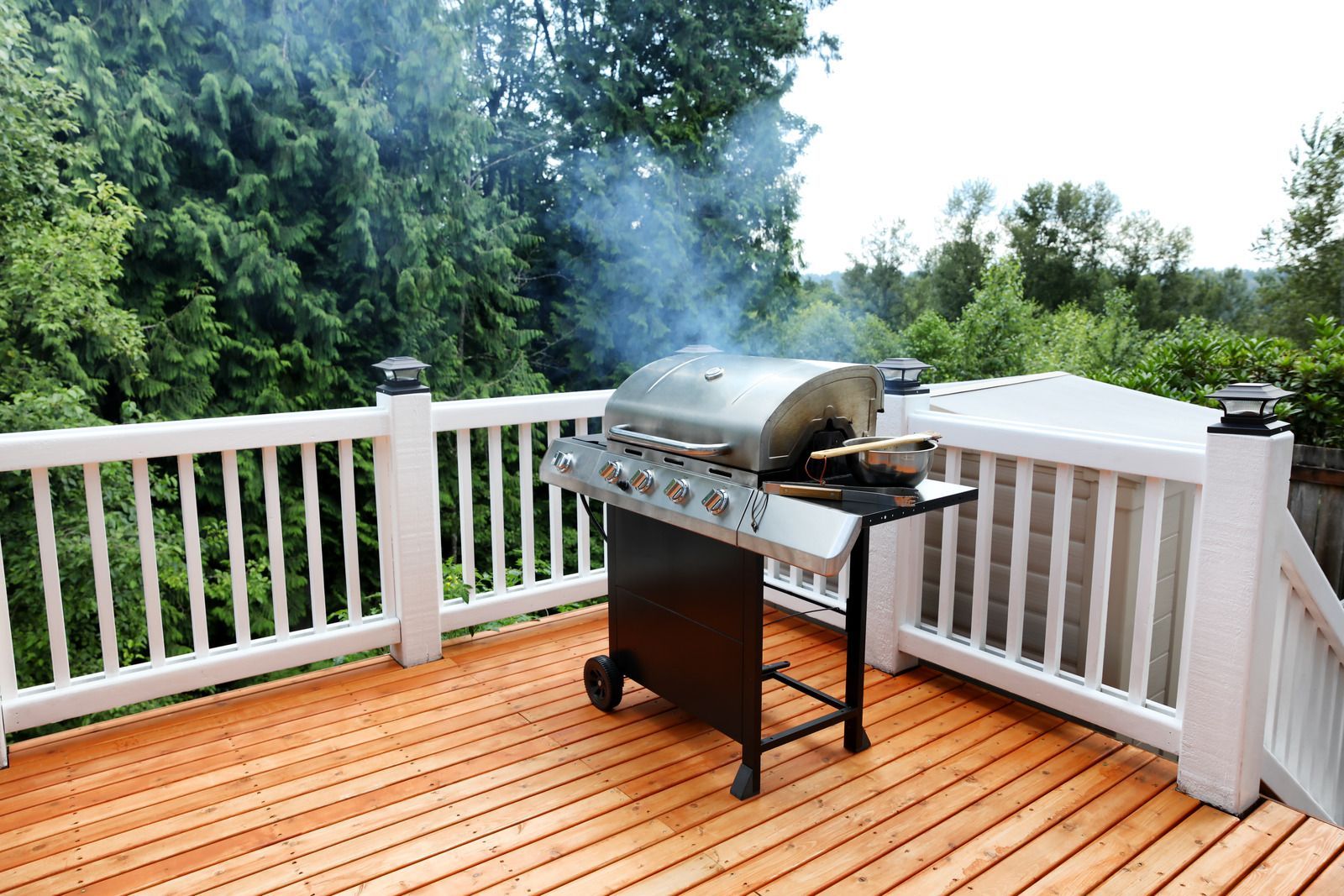
COOKING
Outdoor Kitchen And Grill Pads
Reinforced pads sized and located for grills, smokers and built-in counters, with clearances from siding and traffic considered. Utility routing gets planned before the base goes in rather than chased afterward.
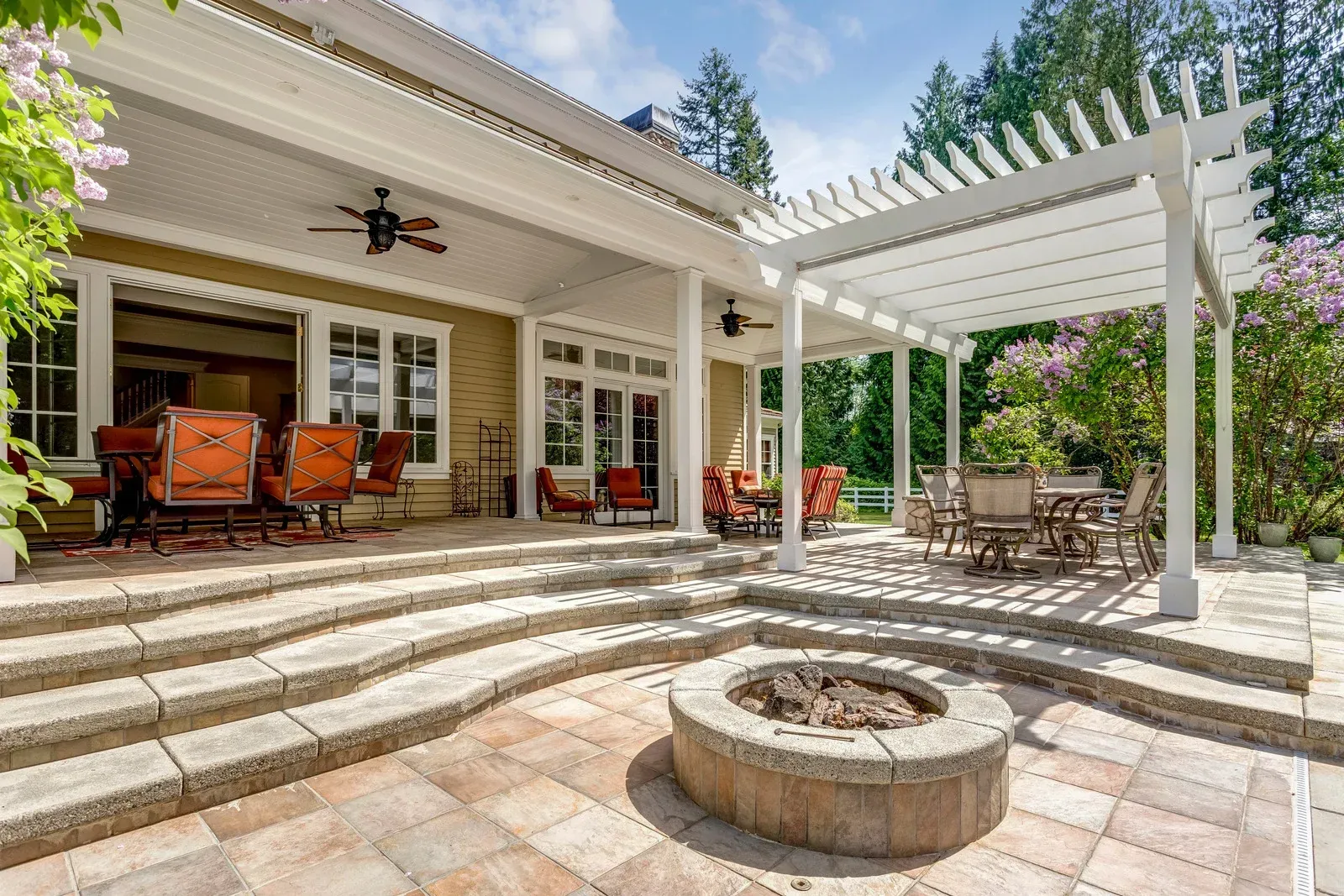
EDGES
Patio Steps And Borders
Steps up to a door, drop-offs to a lower level and soldier-course borders that frame the field. These details are where a patio either looks finished or looks like it stopped.
➜ Common Questions
FREQUENTLY ASKED QUESTIONS.
What people ask before committing to a patio in a climate that freezes and thaws all winter. Anything else can come straight through our contact page.
How long does a paver patio last?
A properly built one lasts decades, well beyond the 25 to 50 year rating most pavers carry. Failures almost always trace back to the base underneath rather than to the pavers themselves, which is exactly where the money belongs.
What size patio do I actually need?
For a table and 6 chairs, plan on roughly 16 by 18 feet so seats can push back without hitting turf. Fire pit seating needs considerably more, and every added function needs its own circulation space around it.
Do I need a permit to build a patio?
Ground-level patios usually do not require one, though setback rules, impervious surface limits and shoreland districts can all apply here. We check all of the local requirements before quoting anything, so nothing can stop the job halfway through.
How much slope does a patio need?
About an eighth of an inch per foot, which is more than enough to shed water without ever being noticeable underfoot. The pitch always runs away from the house, and any doorway threshold gets particular attention during the layout stage.
Can a patio be built over an existing concrete slab?
Sometimes, if the slab is sound, properly pitched and free of major cracking. More often the slab has already failed for the same reason it will fail again, so removing it and rebuilding the base is the better route.
Why do weeds grow between my pavers?
Windblown seed germinating in the joint sand at the surface rather than growing up from below. Polymeric sand, swept in and watered correctly at install, hardens the joints and removes most of the seedbed that those weeds rely on.
When is the best time of year to build a patio?
Anywhere from the spring thaw through late fall, though early season projects tend to schedule more easily. Complete Yard Care Company books patio work across Sauk Rapids, MN well ahead, so winter inquiries usually land the better dates.
Will a patio settle over time?
Not measurably at all when the base was built correctly in the first place. Settlement comes from insufficient depth, poor compaction, organics left behind in the excavation or water with nowhere to drain, and all four of those are avoidable decisions.
➜ HOW WE WORK
FROM STAKED FOOTPRINT TO SWEPT JOINTS, HERE IS HOW.
STEP 01
Stake The Real Footprint
We mark the actual shape on the ground and walk it with you, furniture placement included. Almost every patio grows slightly at this stage, and that is far cheaper now than later.
STEP 02
Set Elevations And Drainage
Finished height gets tied to door thresholds and the existing grade, and the pitch gets established before any excavation begins. Where the water goes is decided on paper, not discovered afterward.
STEP 03
Excavate And Remove Organics
All topsoil comes out down to stable subgrade, because anything that decomposes will settle later. Depth accounts for base, bedding and paver thickness so the finished elevation lands exactly where planned.
STEP 04
Build And Compact The Base
Class 5 goes in and gets compacted in thin lifts until the plate stops sinking, then a screeded bedding layer is set. This stage takes the longest and determines everything above it.
STEP 05
Lay The Field And Cut The Edges
Pavers run off a string line with the pattern held true, borders set, and all cuts made on a saw rather than fudged. Edge restraint goes in before any sand touches the joints.
STEP 06
Compact, Sand And Hand It Over
The surface gets compacted with a protective mat, polymeric sand swept and watered in, and the site cleaned completely. We walk the finished patio with you before the equipment leaves.
➜ GET YOUR FREE ESTIMATE
TELL US WHERE THE PATIO GOES, AND WE WILL PRICE IT, FREE.
Send the location, roughly the size you have in mind and how you want to use it. We will stake the footprint on site, talk through materials, and quote it at no charge.
WHAT YOUR PATIO QUOTE COVERS:
- Footprint staked and walked with you
- Base depth stated in writing
- Drainage and pitch planned first
- Material, pattern and color options
- Edge restraint and polymeric sand included
- A written estimate at no cost