➜ Hardscape
Hardscape IN Sauk Rapids, MN
Minnesota building code puts footings 3.5 feet down in Benton County, because that is how far frost reaches here in a hard winter. Complete Yard Care Company builds hardscape in Sauk Rapids, MN with that depth in mind, setting walkways, steps, fire features and stone work on bases that will not heave, on properties across Foley, St. Cloud and Sartell.
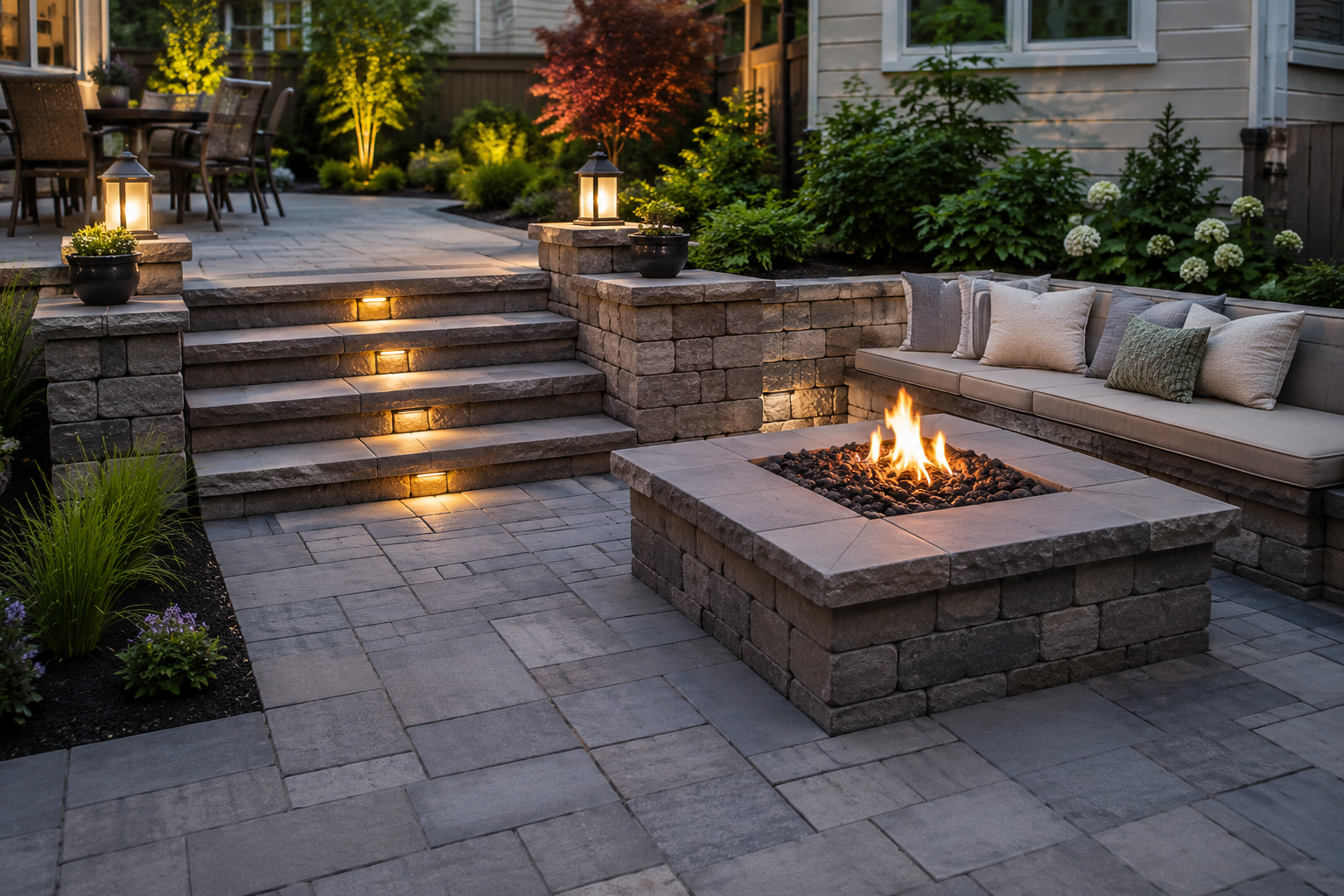
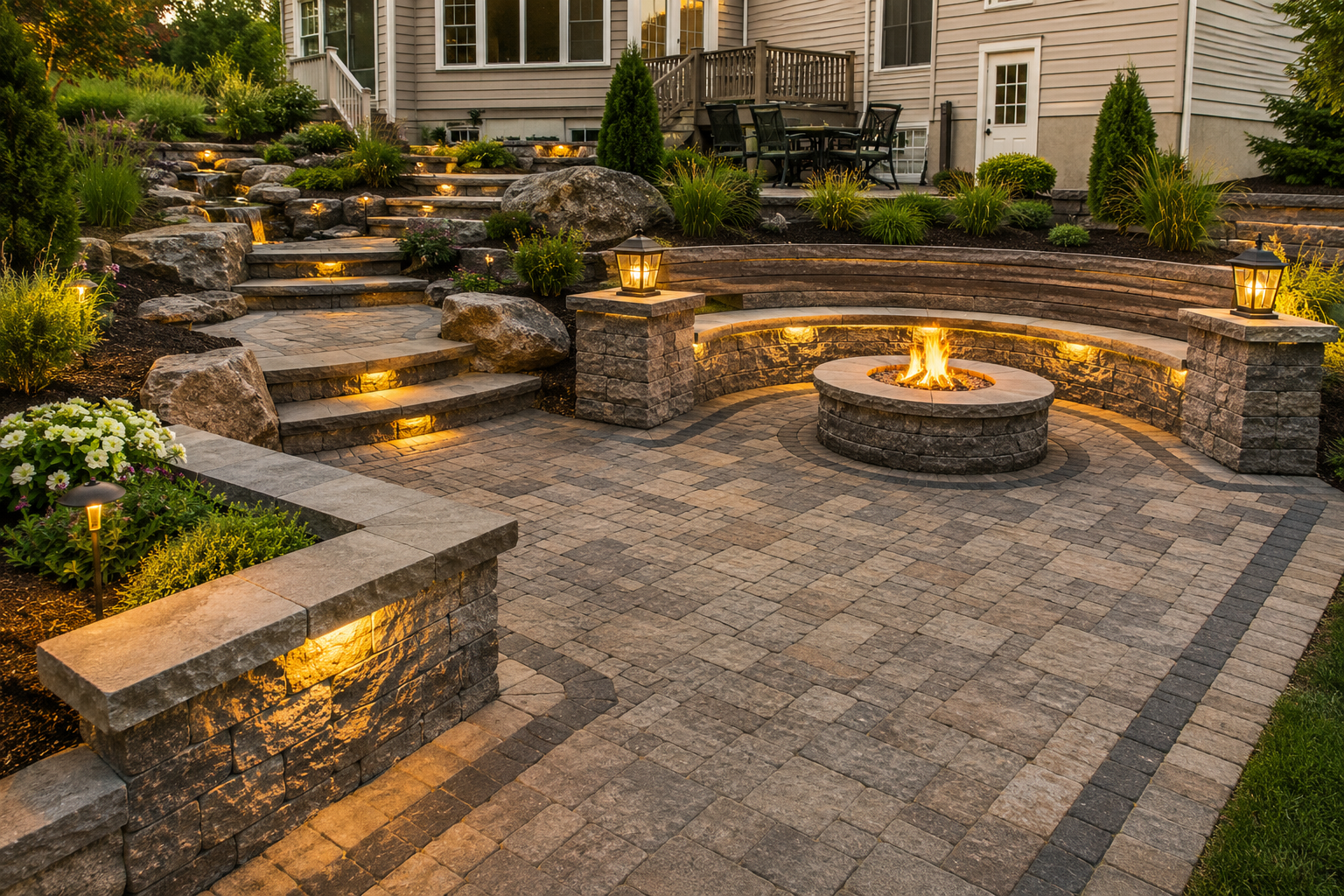
THE PART YOU PAY FOR IS THE PART YOU NEVER SEE.
Anyone can lay pavers on flat ground in July. The difference shows up in April, after 100 freeze and thaw cycles have worked on whatever sits underneath. We excavate deeper than looks necessary, compact granular base in thin lifts rather than one thick dump, and build in the pitch and drainage that keeps water from collecting under the surface where it can freeze.
Frost lifts anything that holds water underneath it. Get the base and the drainage right from the beginning and the finished surface simply has nothing left to lift.
- Excavation depth set for our frost
- Base compacted in thin lifts
- Drainage built into every assembly
- Courses set to string line and level
➜ HARDSCAPE
STONE MAKES A YARD USABLE, NOT JUST PRETTY.
A lawn is a surface you look at. Hardscape is where people actually stand, sit, walk and gather. A defined path stops the shortcut worn across the grass. Steps make a slope safe after dark. A fire feature turns a corner nobody used into the spot everyone ends up. We start by asking how the space fails you now, then choose materials, elevations and layout that solve that specific problem rather than filling the yard with stone.
PAVERS AND CLAY DO NOT GET ALONG BY DEFAULT.
Heavy soil east of the river holds water, and water under a paver assembly is the whole problem. On those lots we dig deeper, add drainage aggregate and often a drain outlet so the base can shed rather than hold. On the sandy ground closer to the Mississippi the issue reverses: bases drain freely but migrate, so edge restraint and proper compaction carry the load. Same materials, genuinely different builds.
STRING LINES AND A PLATE COMPACTOR DO NOT LIE.
20 years in, we know you cannot talk a course into being straight or hurry compaction. Every lift gets run until the plate stops sinking, every course gets checked against a line rather than against the last one, and elevations get shot rather than eyeballed down a slope. It is slower on day 2 and invisible on day 30. Ten winters later it is the only thing anyone can see.
WHAT PROPERLY BUILT HARDSCAPE DELIVERS
SURFACES THAT STAY FLAT
A base built for frost does not heave, settle into ruts or open joints. The surface you walk on in year 10 sits where it did the week it was finished.
SAFE FOOTING ON A SLOPE
Steps and landings at consistent rise and run make a grade usable in the dark and in winter. Uneven improvised steps are where most backyard falls happen.
AN OUTDOOR SPACE THAT GETS USED
Defined seating, paths and fire features change how much time people spend outside. Space with a purpose gets used, and open lawn mostly gets mowed.
NO MORE WORN SHORTCUTS
Paths built where people actually walk stop the bare track across the turf. Working with the traffic pattern beats fighting it with reseeding every spring.
LESS MAINTENANCE THAN LAWN
Stone does not need mowing, watering or feeding. Converting a difficult strip of turf to hardscape removes it from the weekly rotation permanently, along with the trimming.
RESALE VALUE YOU CAN PHOTOGRAPH
Real stonework reads as a permanent improvement rather than decoration. It is one of the few outdoor investments that still shows well years after installation.
➜ WHAT WE BUILD
OUR HARDSCAPE WORK
Everything built from stone, block or paver that is not a patio or a retaining wall. These are the hardscape elements we install for homes and commercial properties around the area.
FOOT TRAFFIC
Walkways And Paths
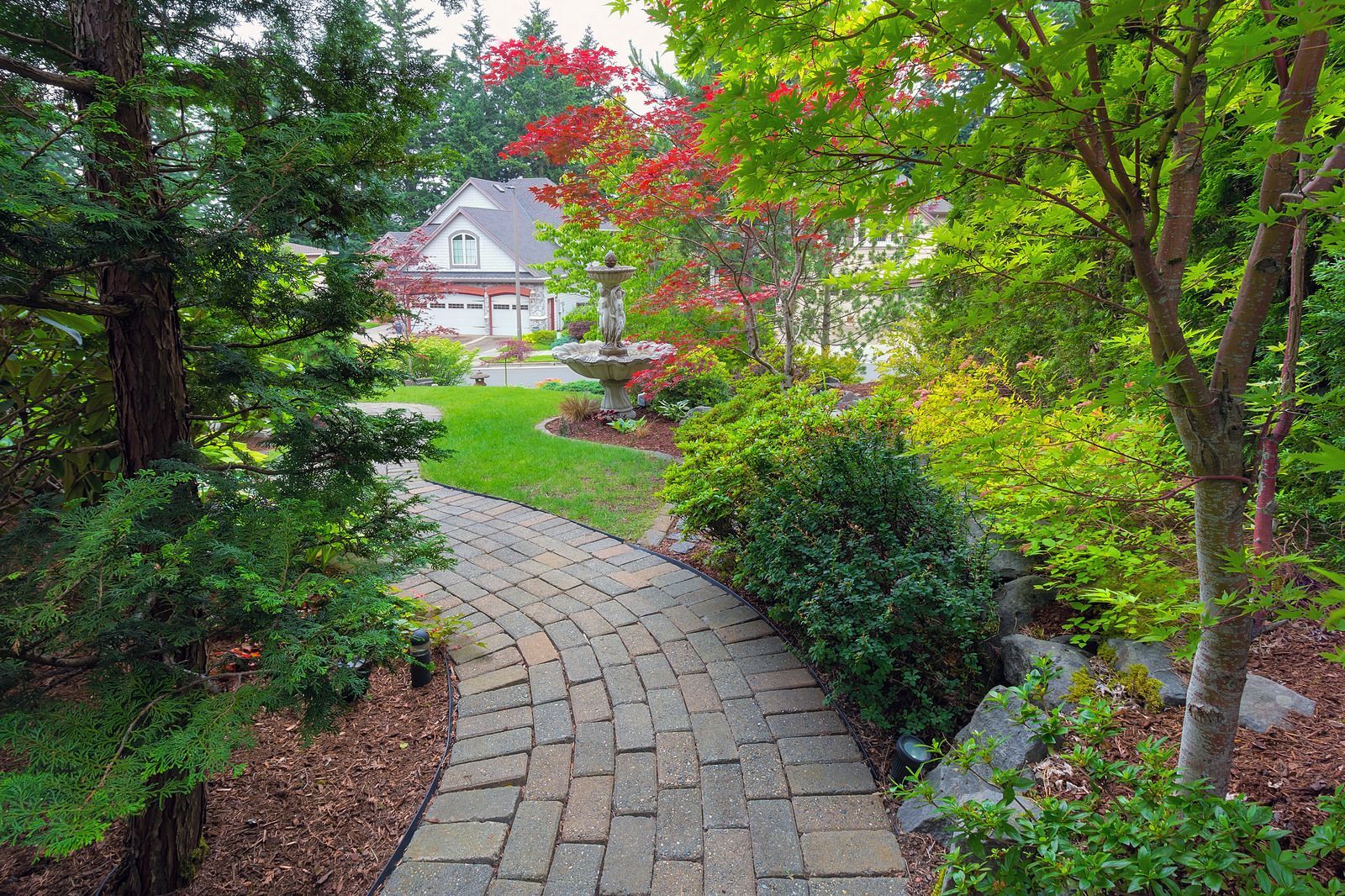
Paver, flagstone or concrete walks set on compacted base with edge restraint holding the line. Widths get sized to how the path is actually used, since a single-file walk beside a main entry never feels right.
GRADE CHANGE
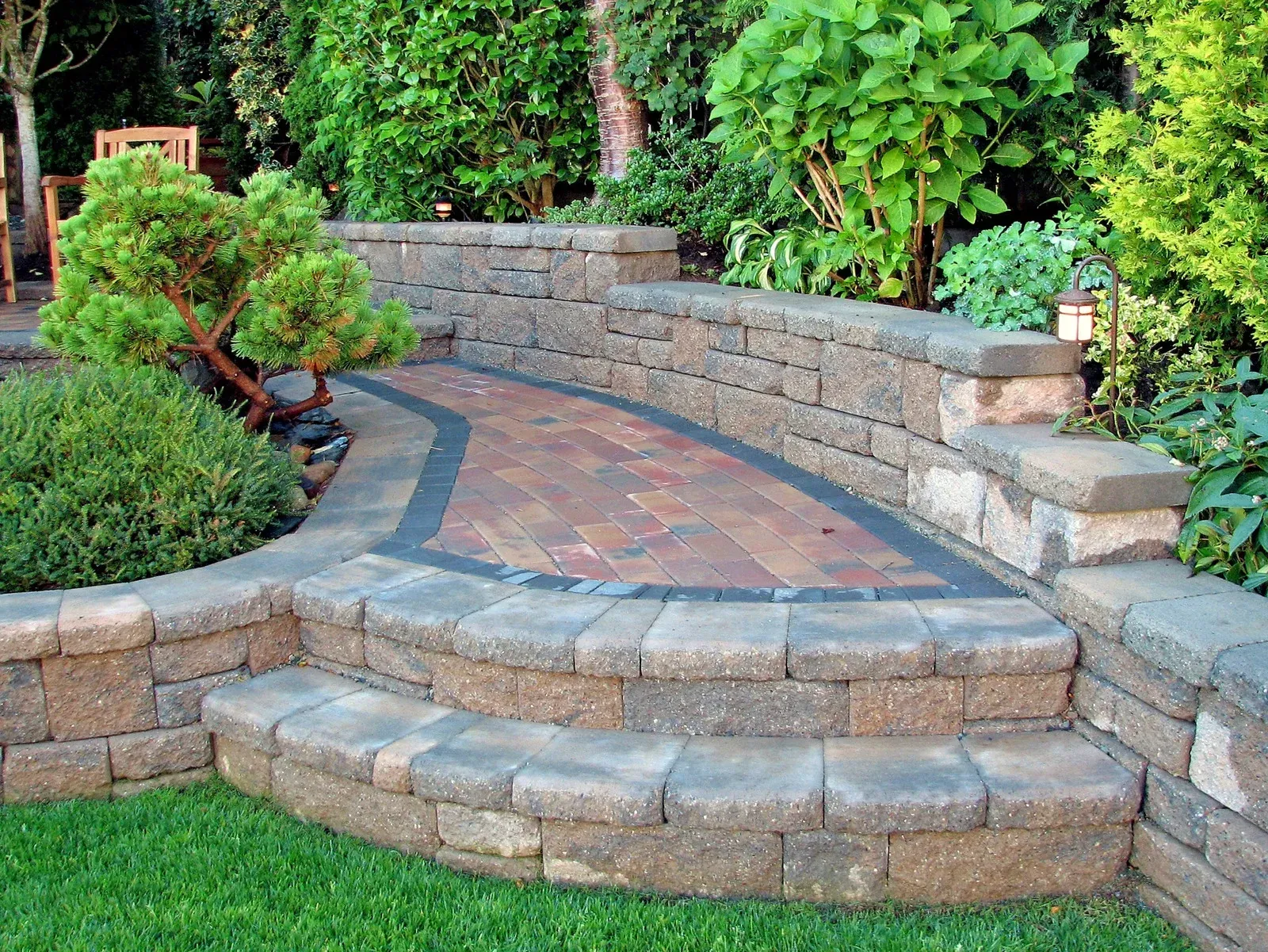
Steps And Landings
Block, natural stone or poured steps built to consistent rise and run so nobody has to think about their feet. Landings get pitched to shed water rather than hold it and ice over in December.
GATHERING
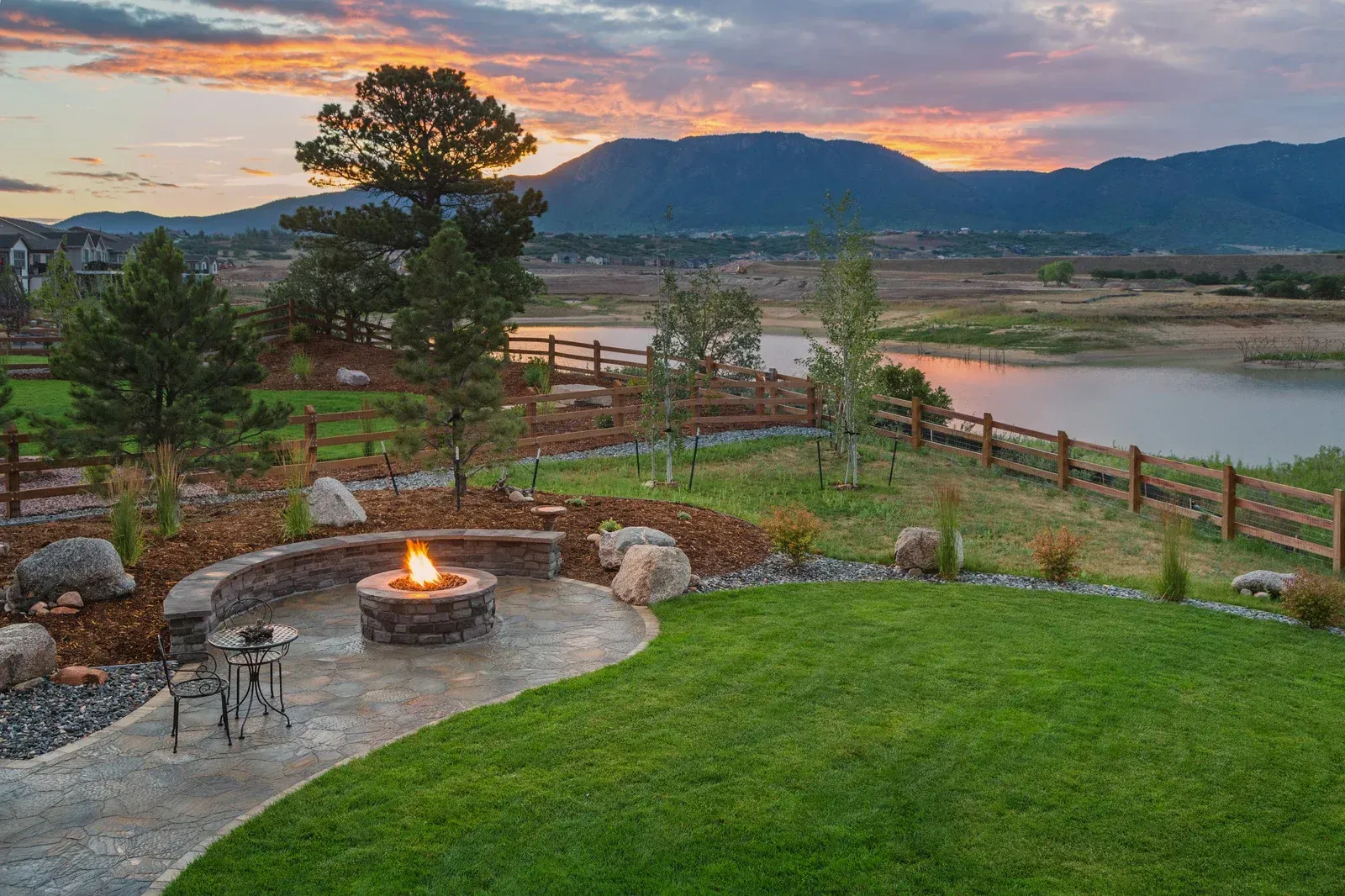
Fire Pits And Fire Features
Built-in or freestanding fire features sized for the seating around them and placed with wind direction, clearances and smoke drift considered. Base and block get set for heat cycling as well as frost.
LOW WALLS
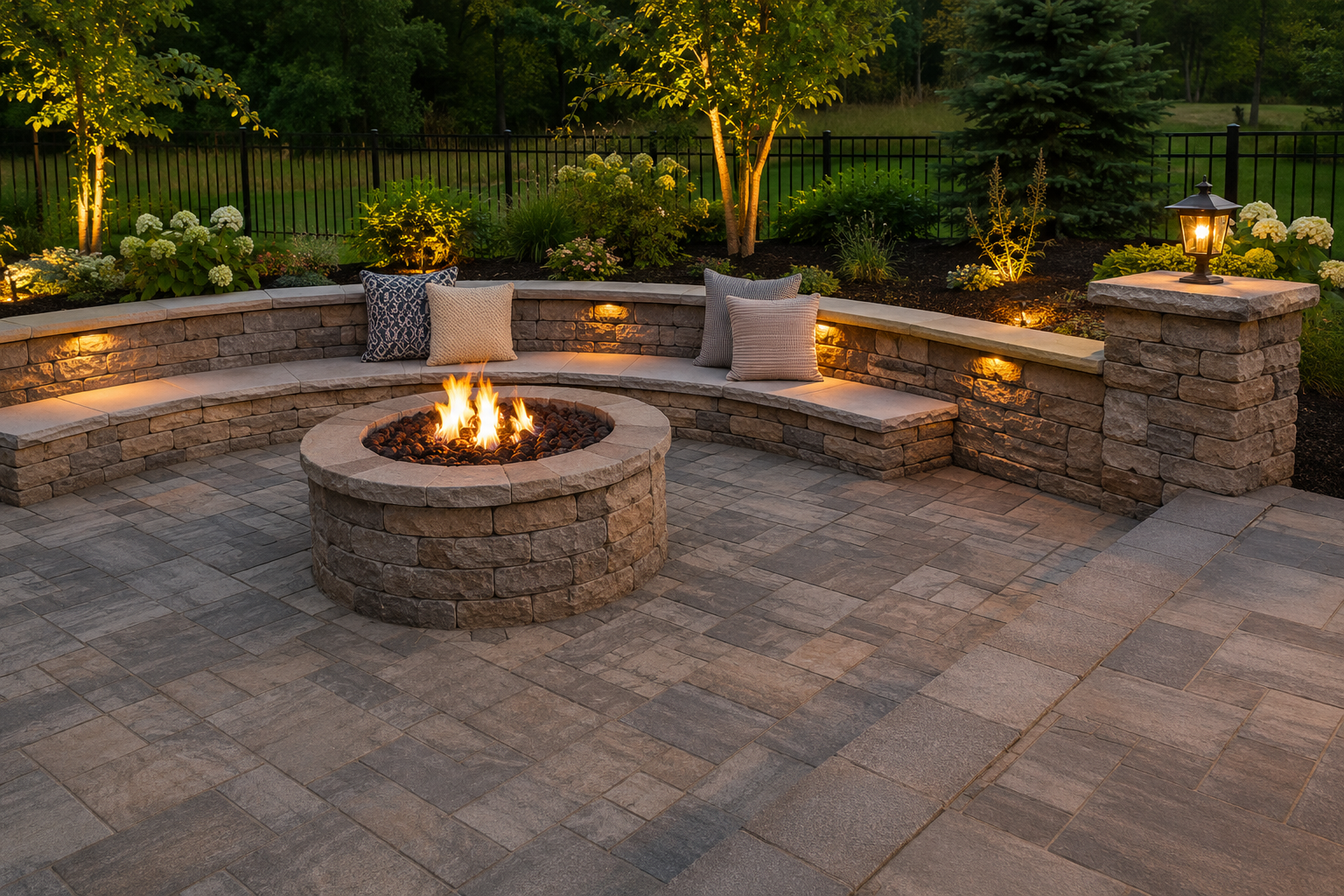
Seating And Garden Walls
Freestanding walls that define space, hold a bed edge or double as extra seating around a fire. Capped, leveled and built on proper base rather than stacked on topsoil and hoped for.
NATURAL LOOK
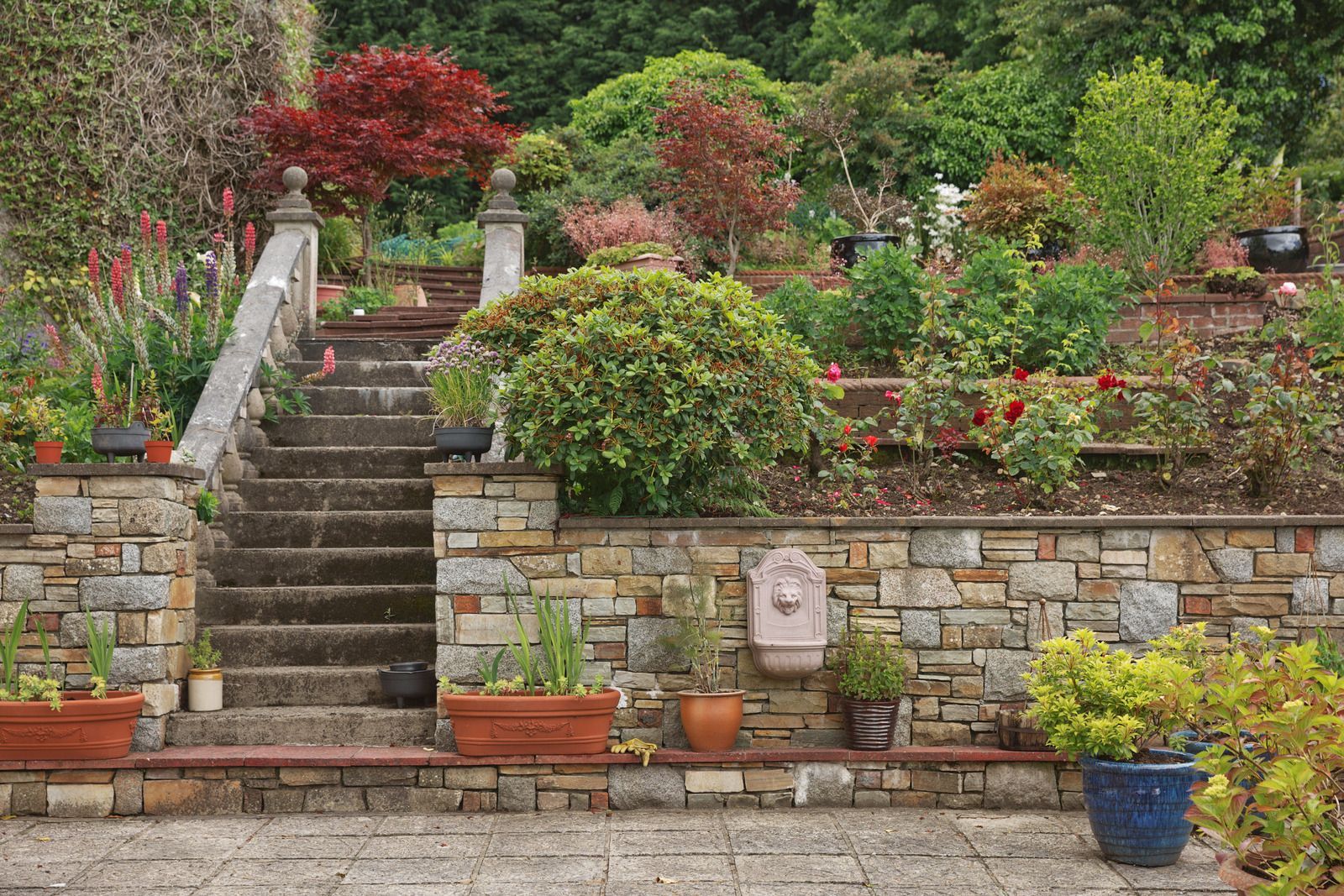
Natural Stone And Boulder Work
Fieldstone, outcropping and boulder placement for slopes, borders and features, set so weight rests where it should. Stone placed by machine and adjusted by hand looks placed rather than dumped.
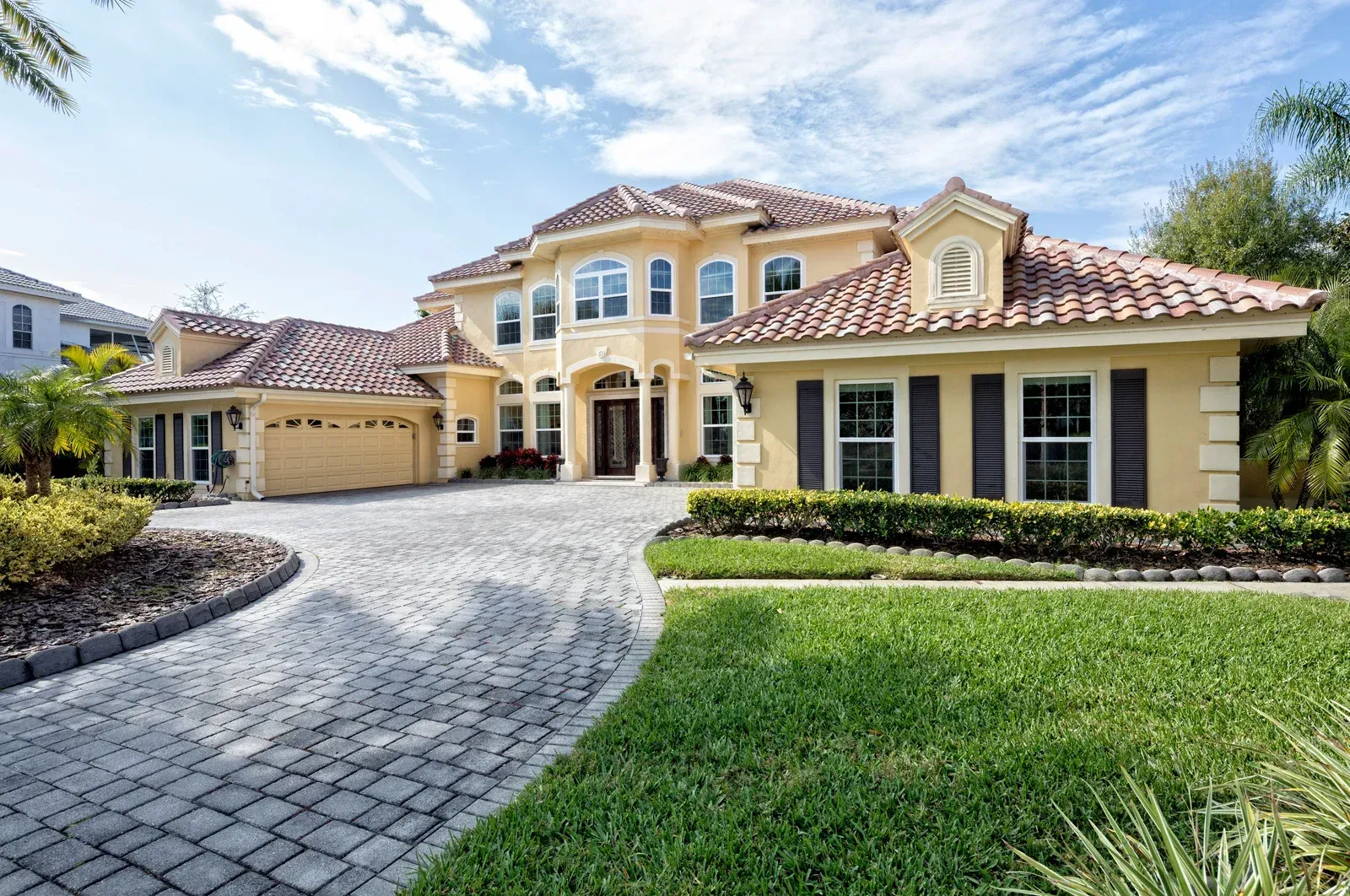
DRIVE SURFACE
Paver Driveways And Aprons
Vehicle-rated pavers on a heavier base built for wheel loads and plow blades. Aprons and parking pads get extra depth, since the corner where the drive meets the street sees the hardest use.
➜ Common Questions
FREQUENTLY ASKED QUESTIONS.
What people ask us before committing to stonework in a climate that moves the ground every single year. Anything else can come through our contact page.
How deep does a hardscape base need to be here?
Six inches of compacted granular base is a working minimum for foot traffic, and driveways or heavy-use areas want more. Depth matters far less than compaction quality, though, since a deep base that was poorly compacted will still settle unevenly.
Do pavers need to be sealed?
Not structurally, but sealing slows staining and holds joint sand in place on high-traffic surfaces. Wait until efflorescence has finished working its way out of new pavers, which usually takes a full season, before applying anything at all.
What is polymeric sand and why does it matter?
It is jointing sand with a binder that hardens when watered in, locking pavers together while staying flexible. It resists washout, discourages weeds and ants, and holds far better than plain jointing sand through repeated freeze and thaw cycles.
Which is better, pavers or poured concrete?
Pavers flex with frost movement, can be lifted and reset individually, and hide small settlement. Poured concrete costs less initially but cracks along its own lines, and any repairs stay visible and are difficult to blend in afterward.
How long does hardscape installation take?
Walkways and small features usually run 2 to 4 days, while larger combinations of steps, walls and fire features take 1 to 2 weeks. Excavation conditions and material lead times move that number more than anything else on a job.
Will hardscape heave in a Minnesota winter?
Not when it is built for it. Heaving comes from water trapped in a poorly drained or under-compacted base, so proper depth, clean aggregate and a real drainage path are what keep an assembly stable through repeated frost cycles.
Do I need a permit for a walkway or fire pit?
Usually not for a ground-level walkway, but fire features, structures and anything sitting near a setback or shoreland district can require approval first. Complete Yard Care Company checks the local requirements before starting any work in Sauk Rapids, MN.
Can you match hardscape to existing stone on the property?
Often, though exact matches on older material can be difficult once a product line changes. Where matching is impossible, we design in a deliberate contrast so the addition reads as intentional rather than as a failed attempt at matching.
➜ HOW WE WORK
FROM STAKED LAYOUT TO FINAL SWEEP, HERE IS HOW.
STEP 01
Lay It Out On The Ground
Before pricing, we stake and paint the actual footprint so you can walk it. Plenty of designs change at this stage, and moving a line around with spray paint costs absolutely nothing at all.
STEP 02
Check Soil, Grade And Utilities
Soil type decides base depth, grade decides drainage, and Gopher State One Call marks what is buried. All three get settled before a machine ever touches the site rather than partway through excavation.
STEP 03
Excavate To Real Depth
Topsoil and organics come out entirely, because a base built on anything that decomposes will eventually settle. Excavation goes deeper than the finished assembly needs so that drainage has somewhere to work.
STEP 04
Build The Base In Lifts
Granular base goes down in thin layers, each one compacted until the plate stops sinking into it. This is the slow, unglamorous stage that decides whether everything above it stays flat.
STEP 05
Set Material To Line And Level
Courses run against string lines, elevations get shot for pitch, and cuts are made rather than fudged. Edge restraint goes in before the joints are filled, so nothing has room to creep outward.
STEP 06
Compact, Sand And Clean Up
Surfaces get plate compacted with a protective mat, polymeric sand swept and watered in, and the whole site cleaned. We walk the finished work with you before any equipment gets loaded back out.
➜ GET YOUR FREE ESTIMATE
SHOW US THE SPACE, AND WE WILL PRICE THE STONEWORK, FREE.
Tell us what is not working out there, whether that is a muddy shortcut, an unsafe slope or an unused corner. We will stake it out, price it, and charge you nothing at all for the visit.
WHAT YOUR HARDSCAPE QUOTE COVERS:
- Footprint staked on the ground
- Soil and drainage assessed first
- Base depth stated in the quote
- Material and color options priced
- Utility locates arranged by us
- A written estimate at no cost