➜ GRADING
GRADING IN Sauk Rapids, MN
Residential code asks for the ground to fall about 6 inches within the first 10 feet away from a foundation, and a surprising number of yards do the opposite. Complete Yard Care Company corrects grading in Sauk Rapids, MN with laser levels and skid steer work, handling foundation grade, lot leveling and driveway work across Foley, Sartell and Benton County.
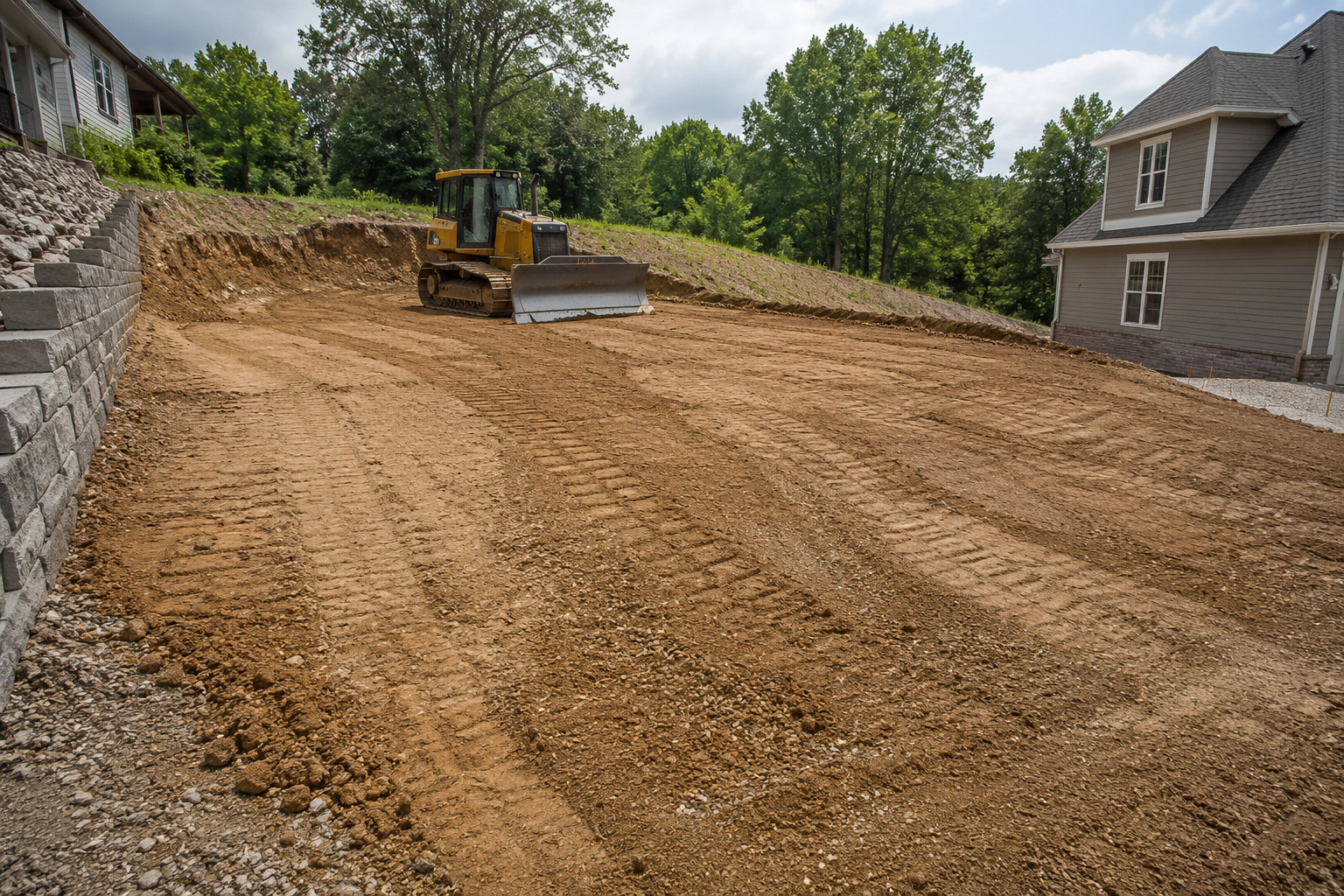
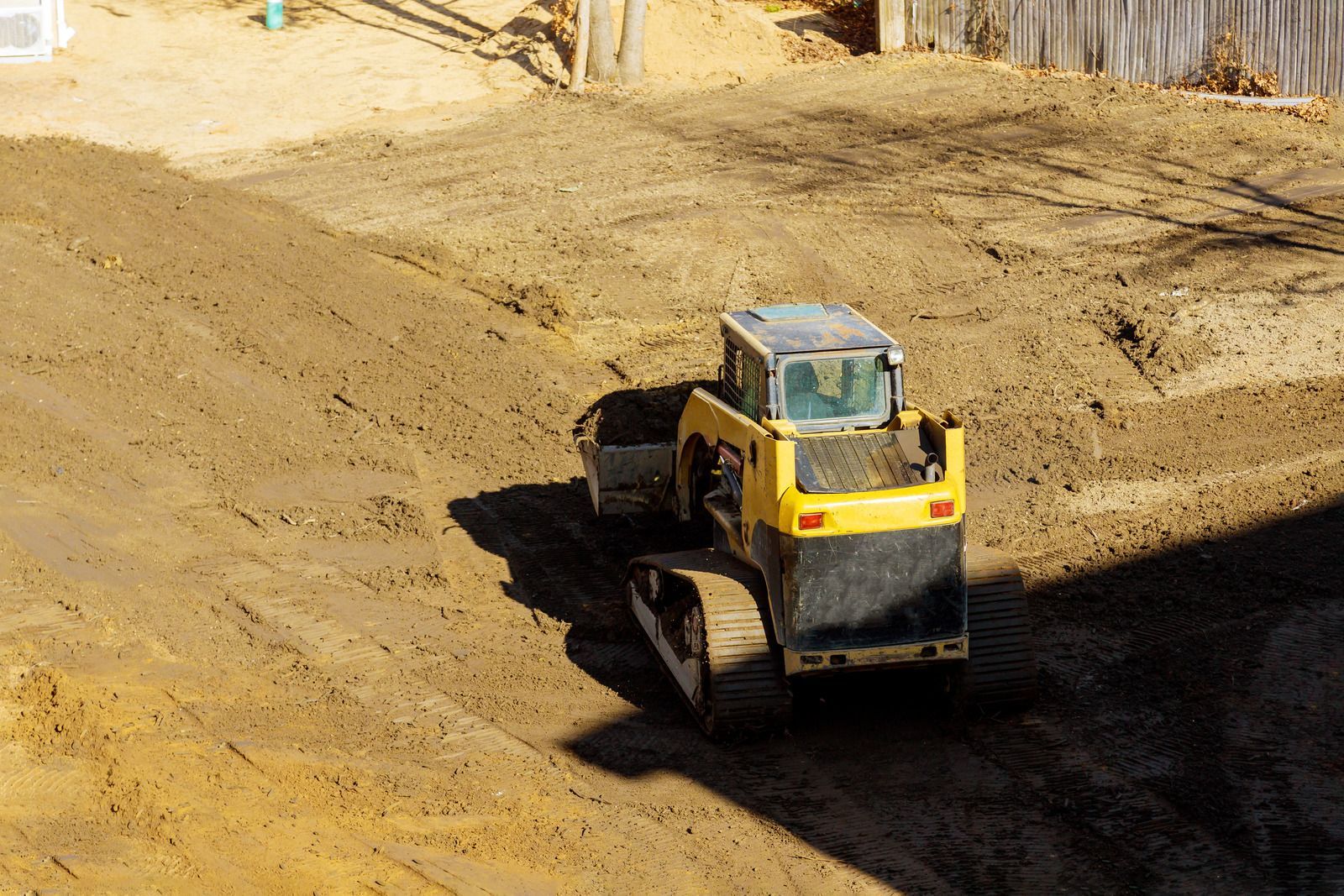
EVERY DRAINAGE PROBLEM STARTS AS A GRADING PROBLEM.
Pipe and gravel get installed all over this county to solve problems that a day with a machine would have fixed. If the ground slopes toward the house, no buried system keeps up during a spring melt. So we look at grade first, correct fall where correcting it is possible, and only then talk about what has to be piped. It is the cheaper order of operations and it produces a better result.
Grading also decides how a lawn mows, how a drive drains and whether the low corner is usable in May. Very little on a property is unaffected by it.
- Elevations shot with a laser
- Fall away from the foundation restored
- Positive drainage to a real low point
- Topsoil replaced before finish grade
➜ GRADING
FLAT IS NOT THE GOAL. CONTROLLED FALL IS.
People ask for a level yard and usually mean an even one. Truly level ground holds water, and holding water is what causes almost every complaint that follows. What a property actually wants is a smooth surface with deliberate, consistent fall carrying runoff toward somewhere it can leave. That looks flat to the eye while working constantly underfoot, and it is the difference between a yard that dries out by Tuesday and one that stays soft into June.
SETTLED BACKFILL IS A LOCAL SPECIALTY.
Houses here get backfilled with the soil that came out of the hole, and that soil keeps settling for years afterward. What started as fall away from the foundation slowly becomes a trench collecting roof water against the wall. Add frost heave working the same ground every winter and the grade quietly reverses. Restoring it is routine work, and it prevents far more expensive problems in a basement that was never actually leaking on its own.
LASERS SETTLE ARGUMENTS ABOUT SLOPE.
Nobody can see a 2 percent fall by standing in a yard, and eyes are especially unreliable across a long lot or beside an existing slope. After 20 years we still shoot elevations rather than debate them, so the finished grade is a number we can show you instead of an opinion. That habit is why our grade work drains correctly on the first storm rather than needing a second visit with more soil.
WHAT CORRECT GRADING DELIVERS
WATER MOVING AWAY FROM THE HOUSE
Restored fall around the foundation sends roof and surface water outward rather than into the backfill. It is the single cheapest defense a basement has.
A LAWN THAT MOWS EVENLY
Smooth grade removes the scalped high spots and the dips that catch a deck. Mowing gets faster and the turf stops being damaged every week.
DRIVEWAYS THAT SHED AND PLOW
Correct crown and fall keep a driveway draining instead of holding meltwater that refreezes. It also gives a plow blade a consistent surface to follow.
USABLE GROUND INSTEAD OF A SWAMP
A low area reshaped to drain returns to normal use. Ground that used to be avoided in spring becomes lawn, garden or parking like the rest of the property.
A FOUNDATION FOR EVERYTHING ELSE
Seeding, sod, patios and planting all work far better on ground that was shaped properly first. Grading is the stage that makes every later improvement behave itself.
EROSION THAT STOPS REPEATING
Reshaping the path that runoff takes ends the washout which reopens after every storm. The repair holds because the underlying cause was addressed, not the symptom.
➜ WHAT WE SHAPE
OUR GRADING WORK
Machine work from a single settled corner to a full lot reshape. These are the grading services we run for homeowners, builders, acreage owners and commercial properties right around the area.
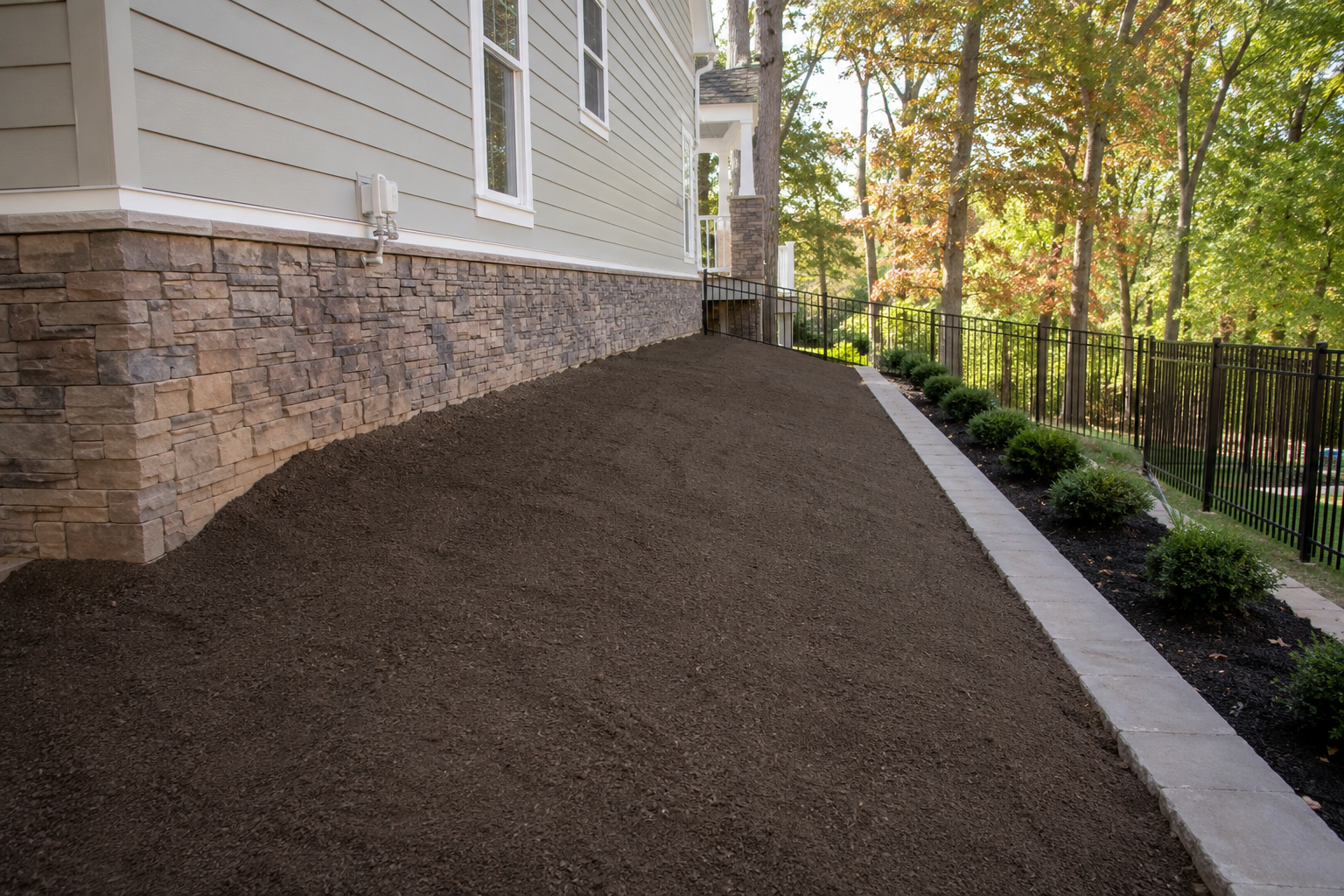
FOUNDATION
Foundation And Final Grading
Settled backfill rebuilt so ground falls away from the wall at a positive slope. Soil gets placed and compacted in lifts rather than mounded, so the corrected grade does not simply settle back again.
NEW BUILD
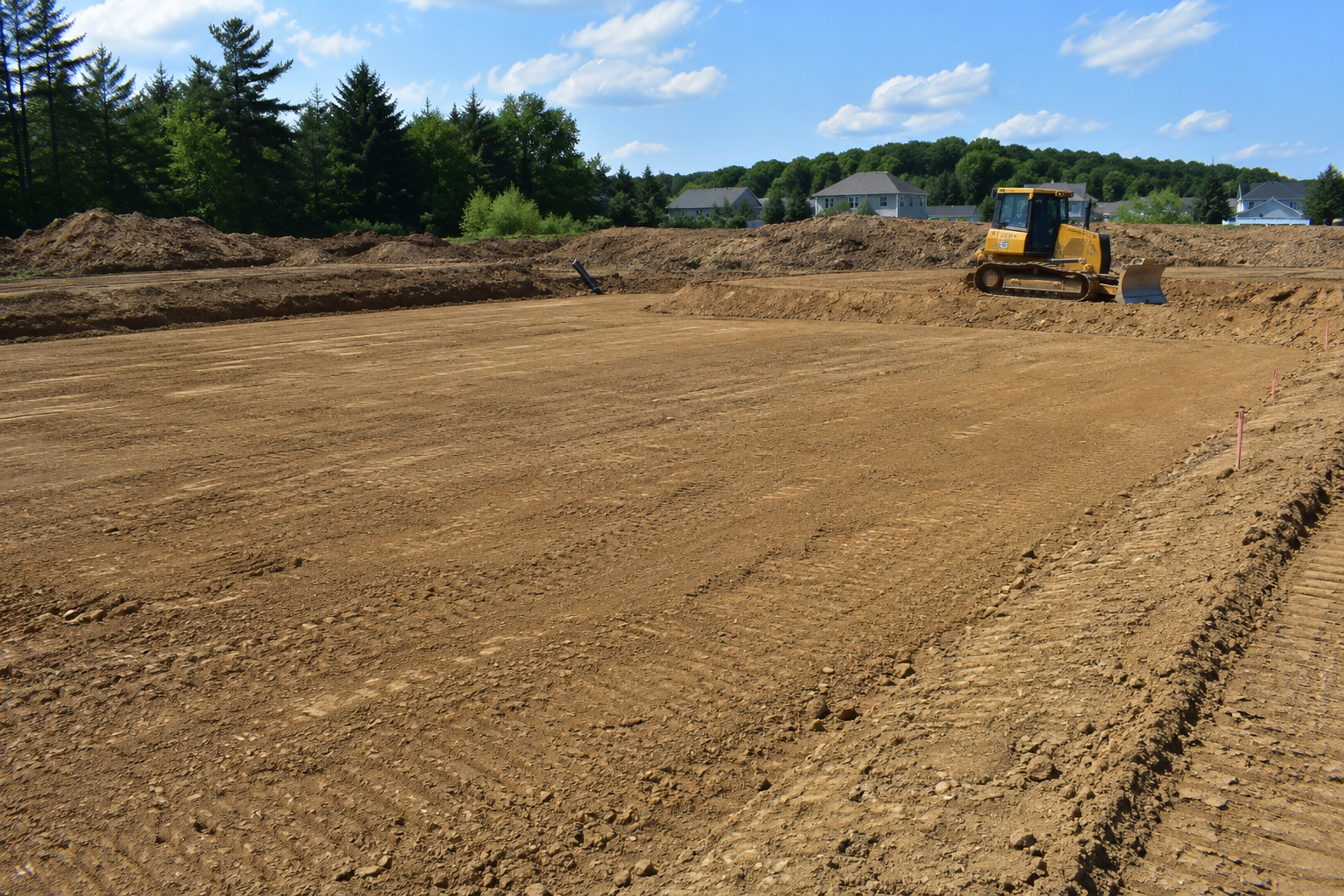
Rough Grading For New Construction
Sites shaped to plan elevations before topsoil and turf, with drainage routes established and building pads brought to grade. Getting this right early prevents the drainage retrofits that new builds otherwise need within a few years.
DRIVE SURFACE
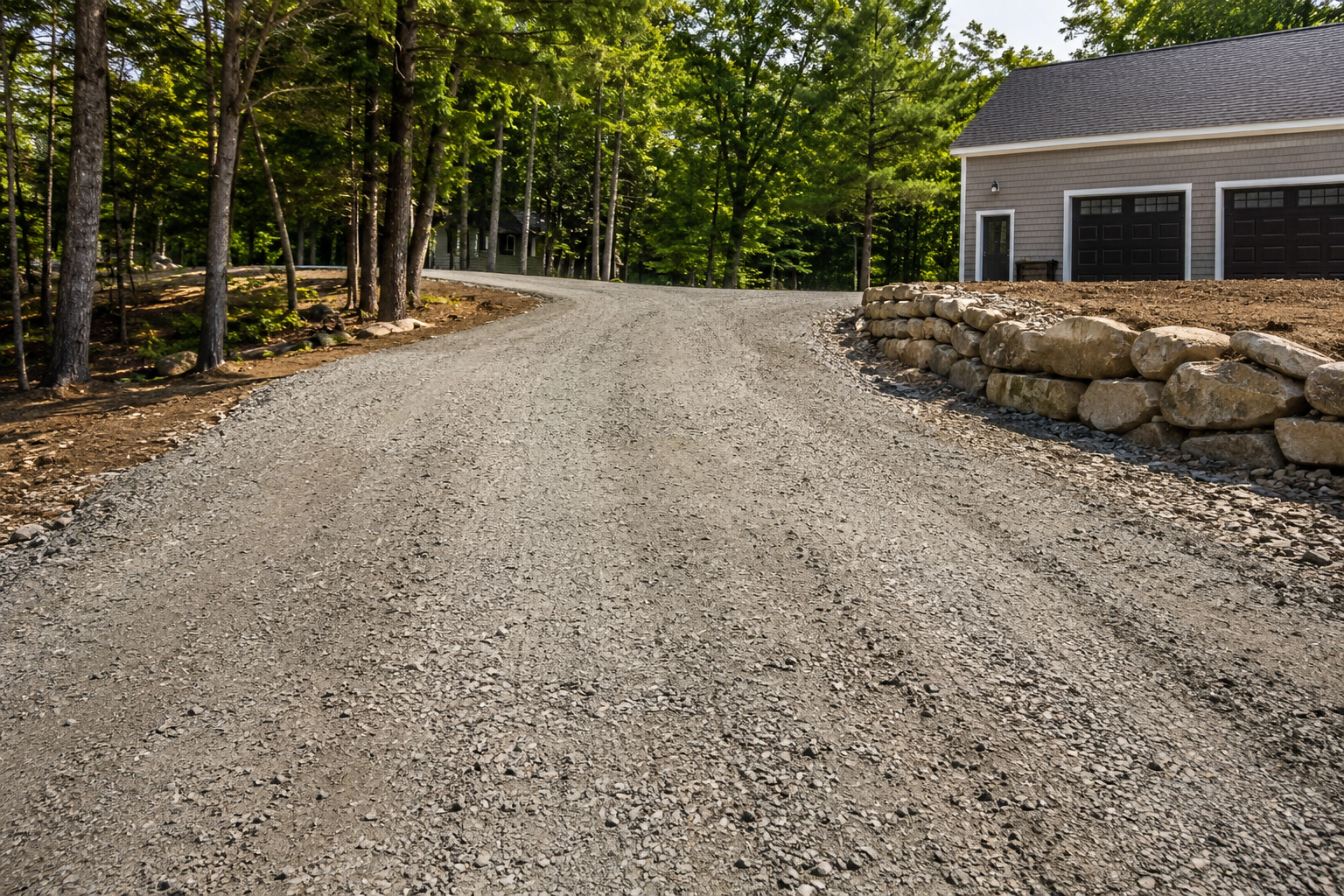
Driveway And Pad Grading
Gravel drives reshaped with proper crown, potholes cut out rather than filled, and parking pads leveled and compacted. Correct fall keeps water off the surface and makes winter plowing far less destructive.
RESHAPE
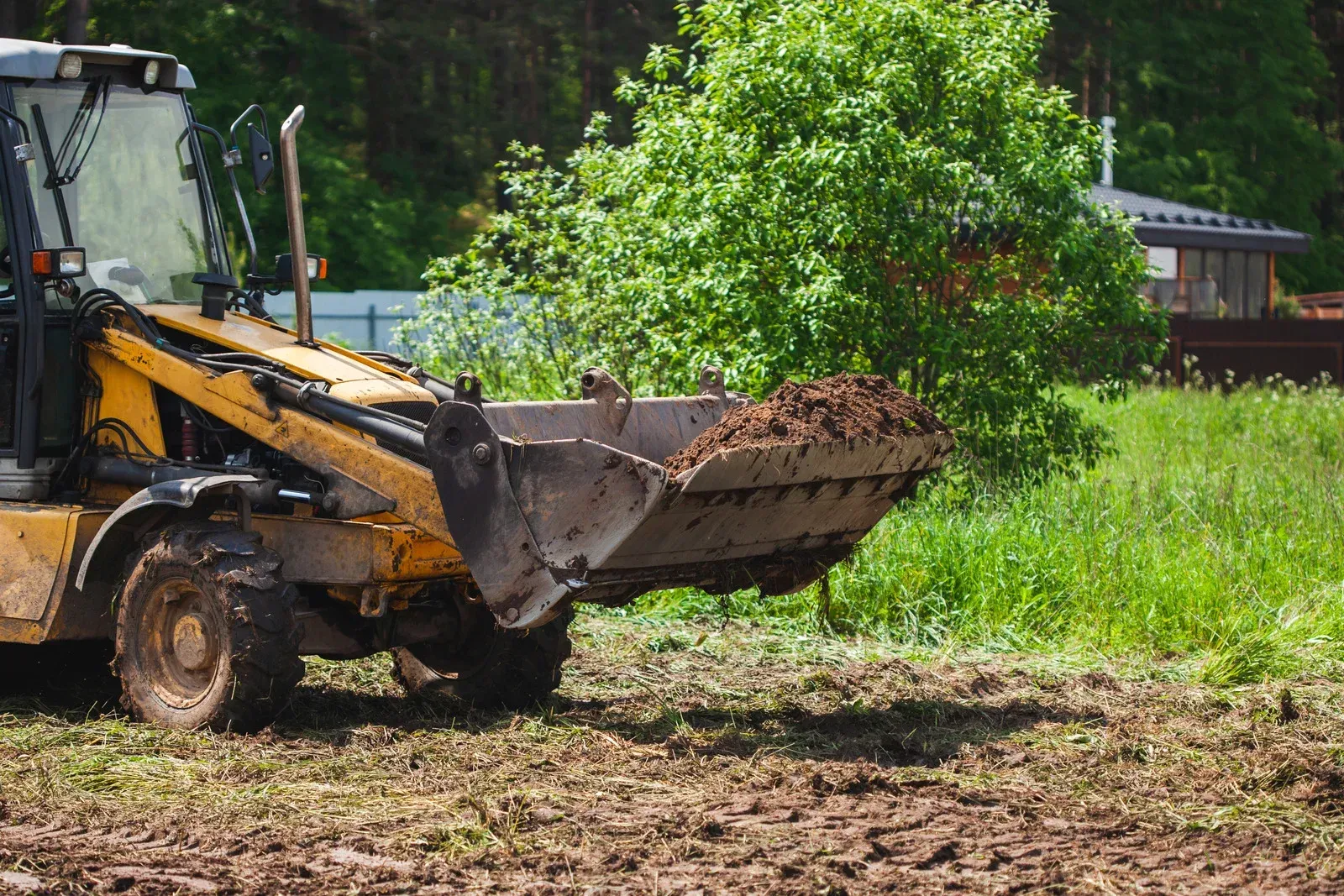
Lot Leveling And Reshaping
Uneven ground, old fill, ruts and abandoned features smoothed into a consistent, usable surface. Large-scale reshaping also gets a chance to build the fall a property never had in the first place.
FINISH LAYER
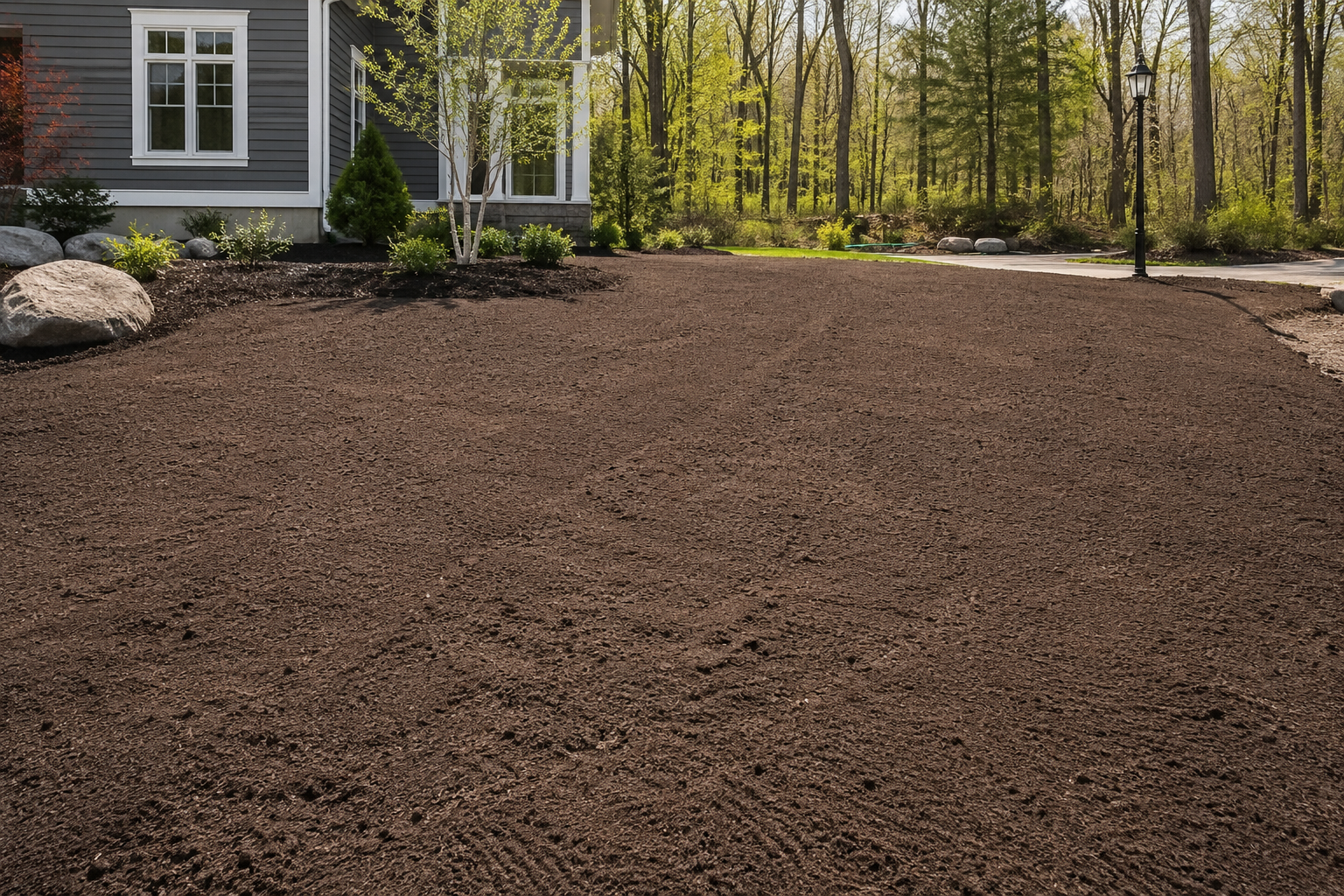
Topsoil Placement And Finish Grade
Screened topsoil spread and raked to final elevation over shaped subgrade, ready for seed or sod. Depth is set for root development rather than for appearance, since thin topsoil produces a lawn that struggles permanently.
REPAIR
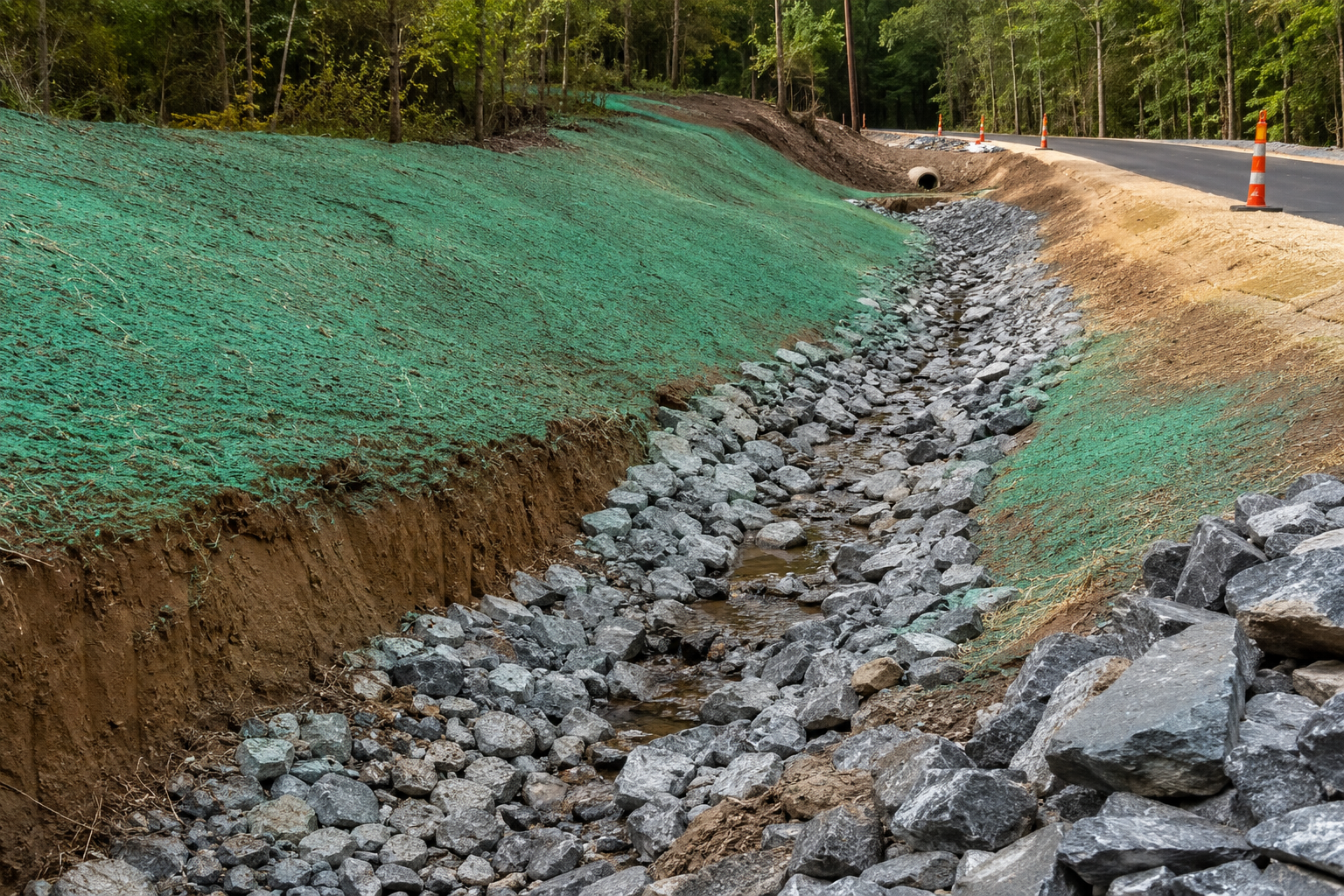
Erosion And Washout Repair
Gullies, washed shoulders and eroded slopes rebuilt with the runoff path corrected so it does not simply happen again. Stabilization usually pairs with hydroseeding to hold the repaired surface while it establishes.
➜ Common Questions
FREQUENTLY ASKED QUESTIONS.
What people ask us most about reshaping ground so that water finally goes where it should. Anything else at all can come straight through our contact page and we will answer it.
How much should the ground slope away from a house?
The common standard is roughly 6 inches of fall within the first 10 feet, which works out near a 5 percent slope. Beyond that first zone, a gentler but consistent fall toward a defined low point is usually enough.
What is the difference between rough and finish grading?
Rough grading shapes subsoil to establish elevations, drainage routes and building pads. Finish grading then spreads topsoil over that shaped base and smooths it to final elevation so the surface is genuinely ready to be seeded or sodded.
Why is my yard bumpy and uneven?
Usually settled backfill, old stump holes, frost heave, mole and vole activity, or fill that was never properly compacted. Repeated mowing over soft ground during the spring thaw also leaves ruts that never quite recover on their own.
Can grading fix water in my basement?
Frequently, because negative grade against the foundation is the most common cause of seepage in this area. Rebuilding the fall away from the wall solves plenty of basements that were otherwise about to receive expensive interior drainage systems.
How long does it take to grade a yard?
A settled foundation corner may take half a day, a full residential lot 2 to 4 days, and acreage work longer. Weather matters enormously here, since trying to grade saturated ground produces a mess rather than an actual grade.
Do I need topsoil after grading?
Yes, if the surface is ever going to grow anything. Subsoil compacts hard and holds very few nutrients, so a proper layer of screened topsoil is what separates a lawn that establishes well from one that struggles on indefinitely.
When is the best time of year to grade a yard?
Late spring through fall, once the ground has dried out enough to shape and compact properly. Complete Yard Care Company schedules grading work around actual soil conditions in Sauk Rapids, MN rather than around a fixed calendar date.
Will grading damage my existing lawn?
Machine work does disturb existing turf, which is why grading repairs are usually paired with seeding or fresh sod. On smaller corrections we work carefully to limit the disturbed footprint, but honest grading is never a no-impact operation.
➜ HOW WE WORK
FROM SHOT ELEVATIONS TO FINISHED SURFACE, HERE IS HOW.
STEP 01
Shoot The Existing Grade
Before anything is quoted, we take elevations across the area in question. Real numbers show exactly where the ground falls, where it reverses and how much material a proper correction will take.
STEP 02
Identify Where Water Should Go
A grade only works if there is somewhere for the runoff to end up. That endpoint gets established first, and everything else on the site is then shaped to deliver water toward it.
STEP 03
Strip And Protect The Topsoil
Existing topsoil gets pulled aside and stockpiled rather than buried under fill. It goes back on at the end, which is the difference between a lawn and a struggling patch of subsoil.
STEP 04
Cut, Fill And Compact
Machines move material to the target elevations, with fill placed and compacted in lifts. Loose fill dumped in one pass settles later and takes the corrected grade straight back down with it.
STEP 05
Verify The Slope With Instruments
Finished subgrade gets shot again and adjusted until all the numbers match the plan. Checking rather than assuming is how a grade drains correctly on the very first significant rainfall.
STEP 06
Replace Topsoil And Establish Cover
Stockpiled topsoil goes back at proper depth, gets raked smooth, and is seeded or sodded. Freshly shaped bare ground erodes quickly, so getting cover established promptly is what protects the work.
➜ GET YOUR FREE ESTIMATE
TELL US WHERE THE WATER GOES WRONG, AND WE WILL PRICE IT, FREE.
Send the address and what is happening out there, whether it is a wet foundation, a rutted drive or a corner nobody can mow. We will shoot the grade and quote the work at no charge.
WHAT YOUR GRADING QUOTE COVERS:
- Existing elevations shot on site
- Target slope stated in numbers
- Material quantities calculated
- Topsoil stripped and replaced
- Seeding or sod priced as an option
- A written estimate at no cost