➜ DRAINAGE
DRAINAGE IN Sauk Rapids, MN
One inch of rain across a 2,000 square foot roof sheds roughly 1,250 gallons, and every gallon lands within a few feet of the foundation. solves drainage problems in Sauk Rapids, MN by routing that volume somewhere useful, with French drains, catch basins, dry wells and drain tile on properties across Foley, Sartell and Benton County.
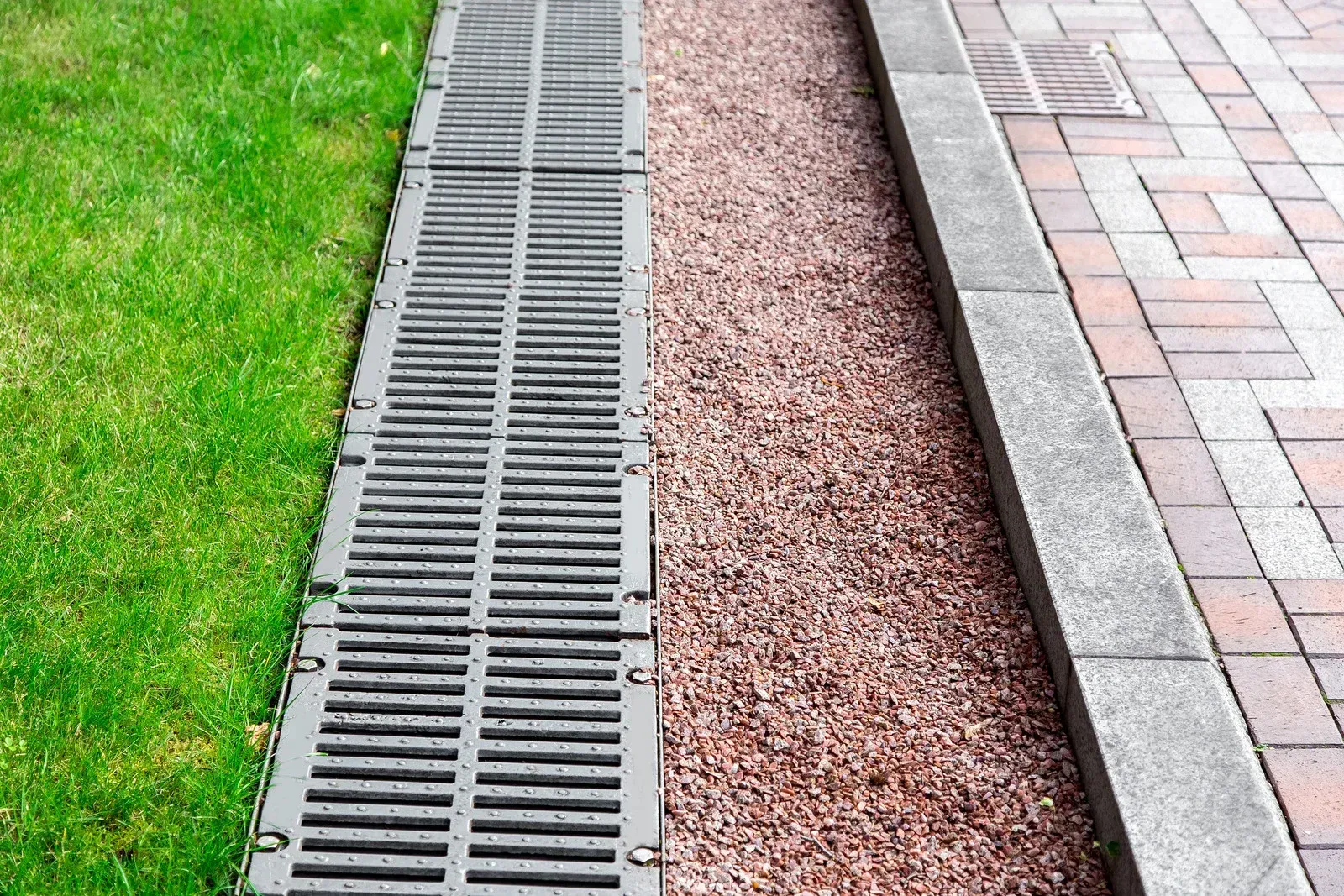
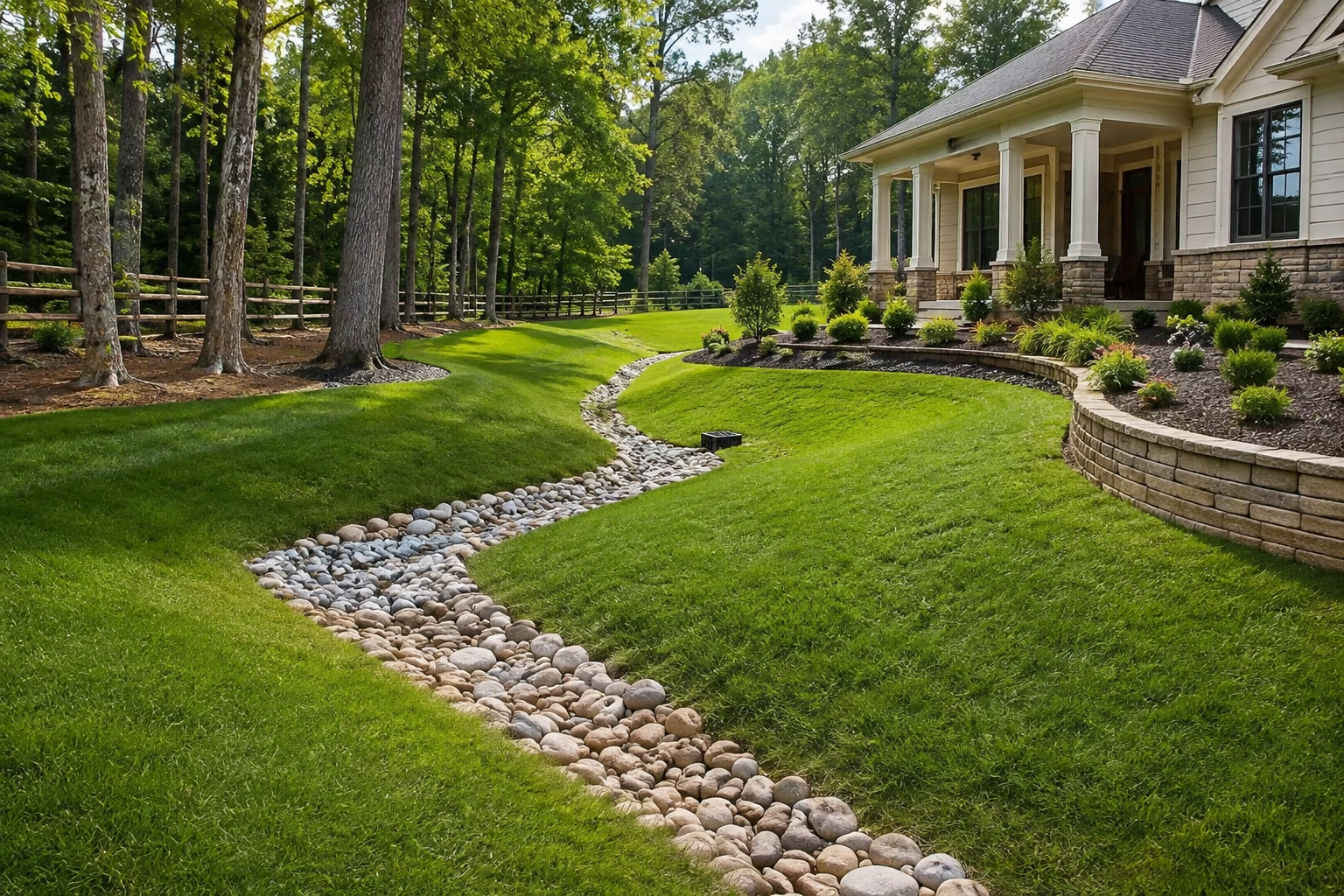
WET YARDS ARE A ROUTING PROBLEM, NOT A MYSTERY.
Water is predictable. It goes downhill, it collects in the lowest point it can reach, and it stops moving when it hits soil that will not accept it any faster. So we start by finding out where it currently goes rather than guessing where it should. That means walking the property during or right after rain, checking downspout discharge, following surface fall, and probing soil to see how fast it actually drains.
Once the path is known, the fix is usually straightforward. Skip that step and you end up installing an expensive drain in the wrong place.
- Property walked wet, not just dry
- Downspout discharge checked first
- Soil percolation tested before design
- Every drain given a real outlet
➜ DRAINAGE
DOWNSPOUTS ARE WHERE MOST BASEMENT WATER STARTS.
Before anyone digs a trench, look at where the gutters empty. A downspout dumping at the foundation delivers hundreds of gallons into the exact soil you need to stay dry, and no interior system fixes a problem that is being created outside. Extending discharge well away from the house, or tying it into a buried line that daylights downhill, resolves a surprising share of wet basement complaints on its own, for a fraction of the cost.
CLAY AND FROZEN GROUND MAKE A BAD COMBINATION.
Much of the heavy soil around here accepts water slowly on the best day of the year. In late March, with frost still in the ground and snowmelt running, it accepts almost nothing at all. That is when yards flood and basements find their weak spots. Drainage here has to work as surface routing, not just as infiltration, because there are weeks every spring when nothing is soaking in anywhere.
WATER TELLS US WHERE IT WANTS TO GO.
20 years of digging in this county means we can usually read a wet yard before the shovel comes out. Silt lines on a foundation, the flattened grass in a swale, moss on one side of a walk, the tree that always leans downhill: all of it points at the path. Following the evidence rather than the guess is what keeps a drainage job from becoming a second drainage job.
WHAT PROPER DRAINAGE DELIVERS
A DRY BASEMENT AND FOUNDATION
Moving roof and surface water away from the wall relieves the pressure that finds cracks and cold joints. Most basement seepage is an outdoor problem in disguise.
A LAWN YOU CAN MOW IN MAY
Standing water keeps turf soft for weeks, kills the grass under it and ruts under any equipment. Draining those low areas puts them back into normal use.
NO MORE ICE SHEET ON THE WALK
Water that runs across a walk or drive refreezes every night. Routing it away removes the ice patch that reappears in the same place all winter.
PROTECTION FOR HARDSCAPE AND WALLS
Patios, walls and driveways all fail faster when water sits under or behind them. Drainage extends the life of everything else built on the property.
TURF AND PLANTS THAT STOP DROWNING
Roots need air as much as water. Draining a chronically saturated area lets grass, shrubs and trees survive in a spot where they used to die.
AN END TO EROSION CHANNELS
Concentrated runoff carves the same channel a little deeper every storm. Spreading or capturing that flow ends the annual repair to a lawn edge or a planting bed.
➜ WHAT WE INSTALL
OUR DRAINAGE WORK
Surface water, roof water and groundwater each need a different answer. These are the drainage solutions we install for homes, acreages and commercial sites right around the area, above ground and below it.
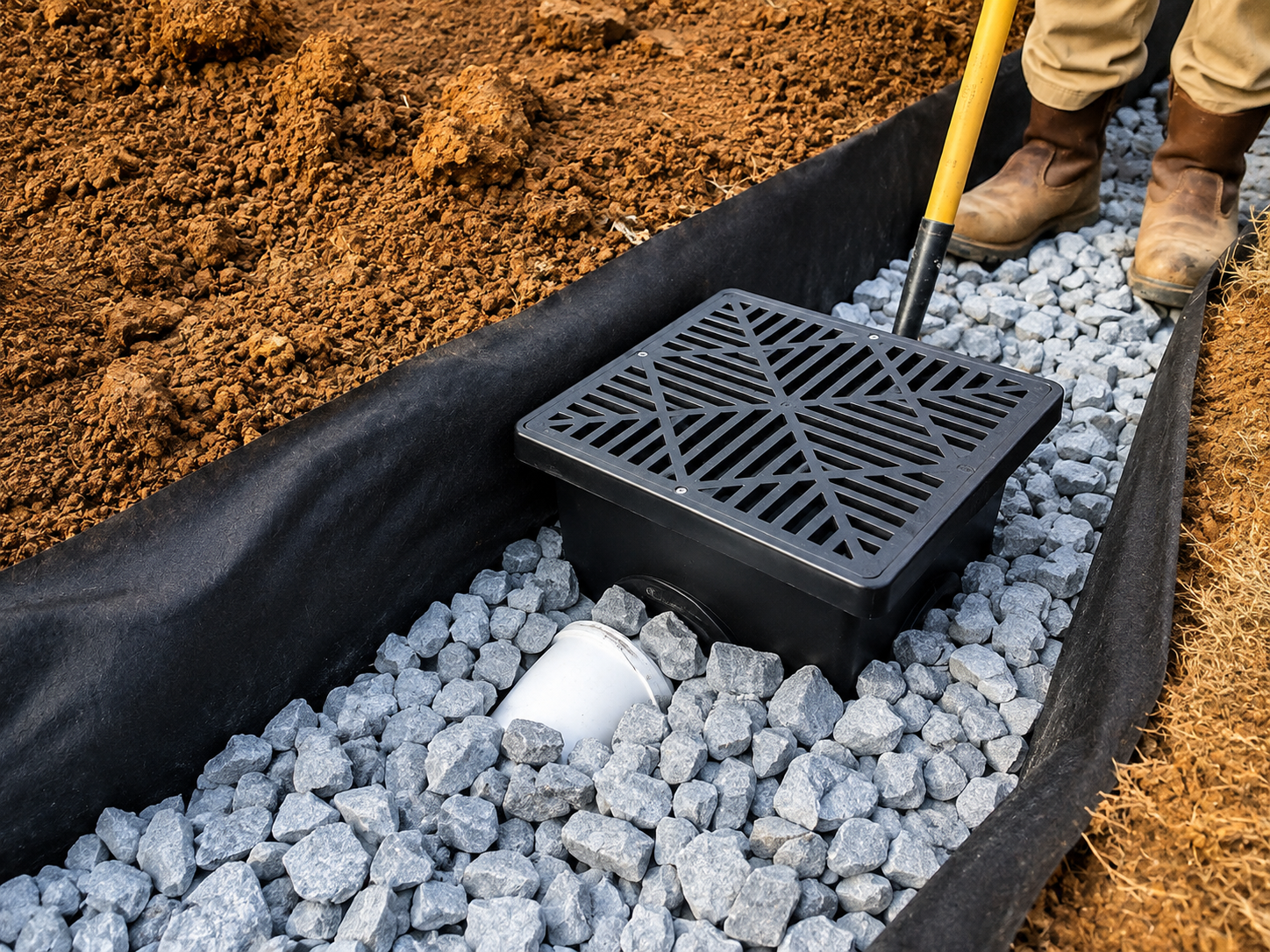
BURIED LINE
French Drains
Perforated pipe bedded in washed rock and wrapped in filter fabric, set to intercept groundwater and carry it to a lower outlet. Depth and slope get calculated rather than eyeballed, since a flat drain moves nothing.
LOW POINT
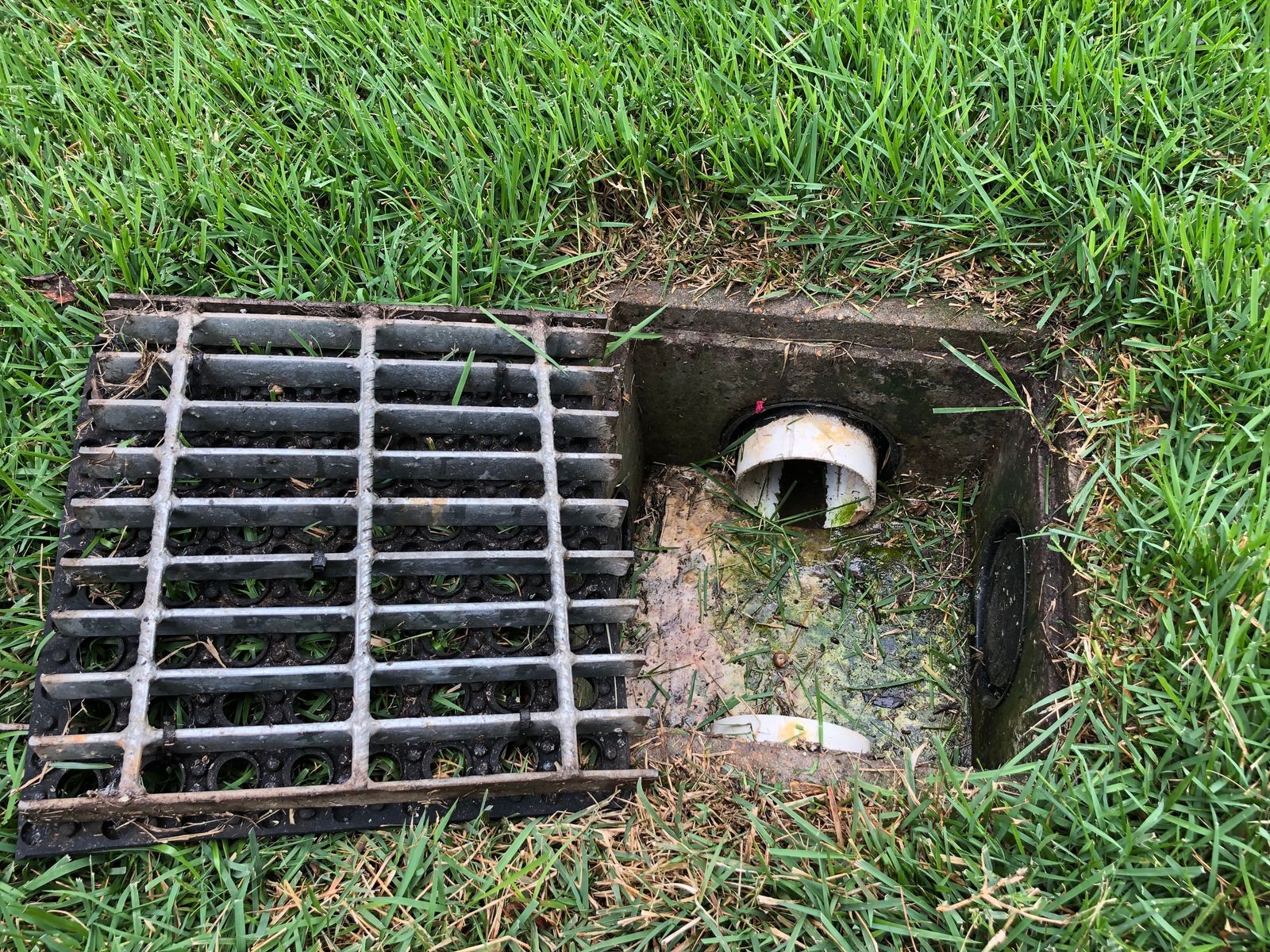
Catch Basins And Yard Drains
Grated inlets set at the collection points, tied into solid pipe running to daylight or a dry well. Sump depth below the outlet lets sediment settle where it can be cleaned rather than plugging the line.
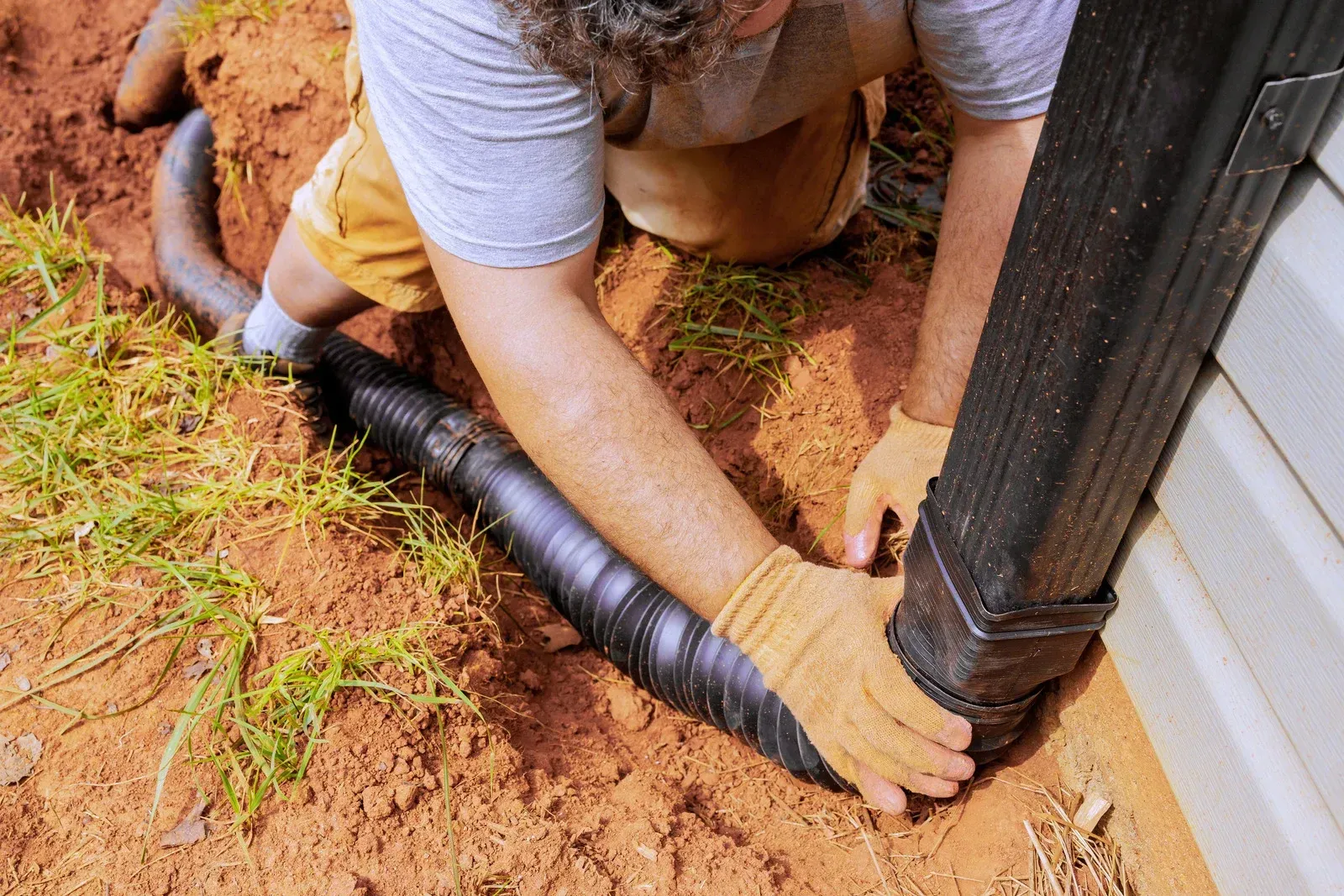
ROOF WATER
Downspout Extensions And Tie-Ins
Gutter discharge carried well clear of the foundation, either on the surface or through buried line. This is usually the cheapest drainage fix available and it solves a remarkable number of wet basements.
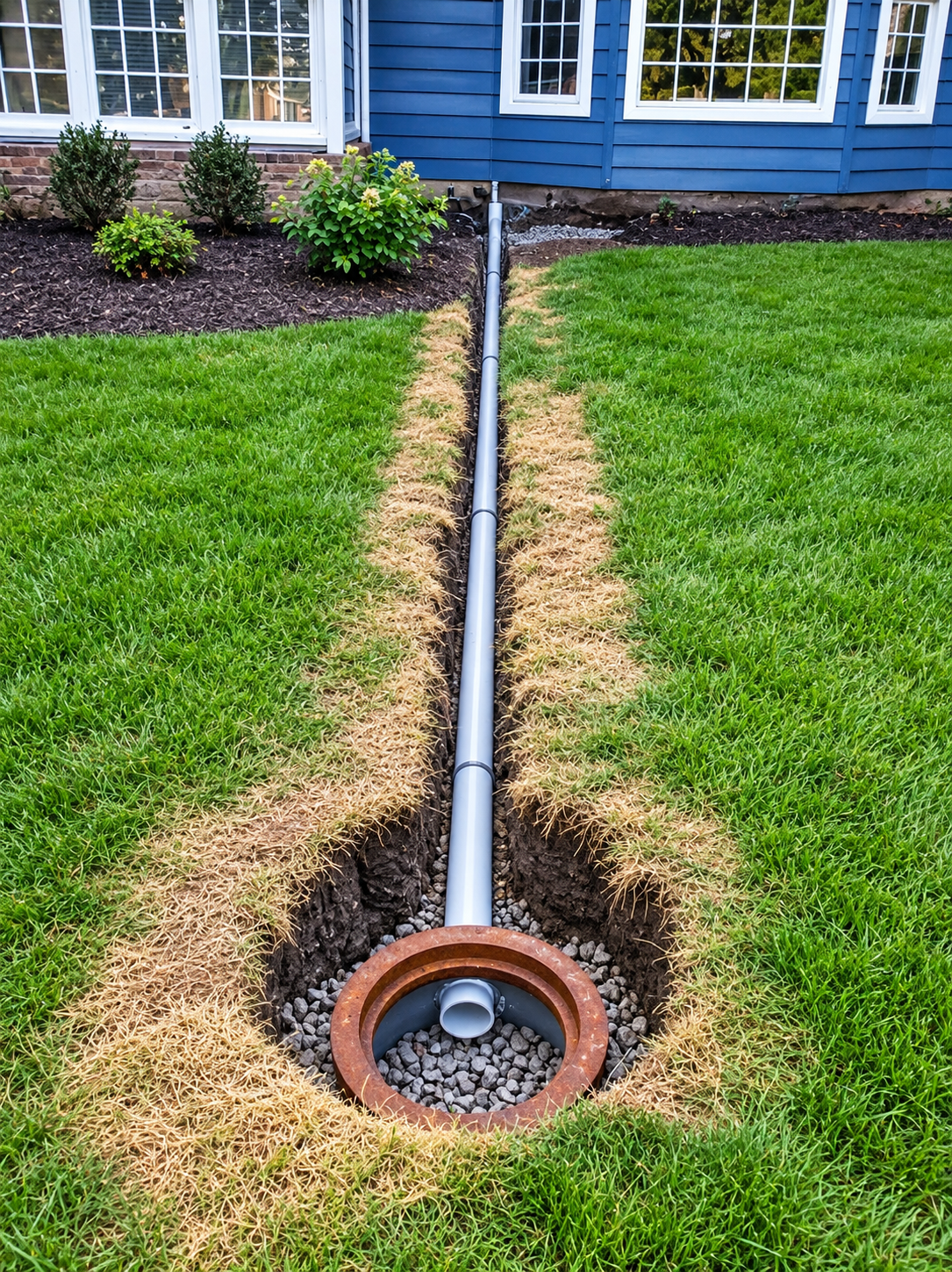
STORAGE
Dry Wells
Buried chambers or aggregate pits that hold runoff and let it infiltrate slowly, used where there is no lower point to discharge toward. Sizing depends on soil percolation and how much roof or paving feeds them.
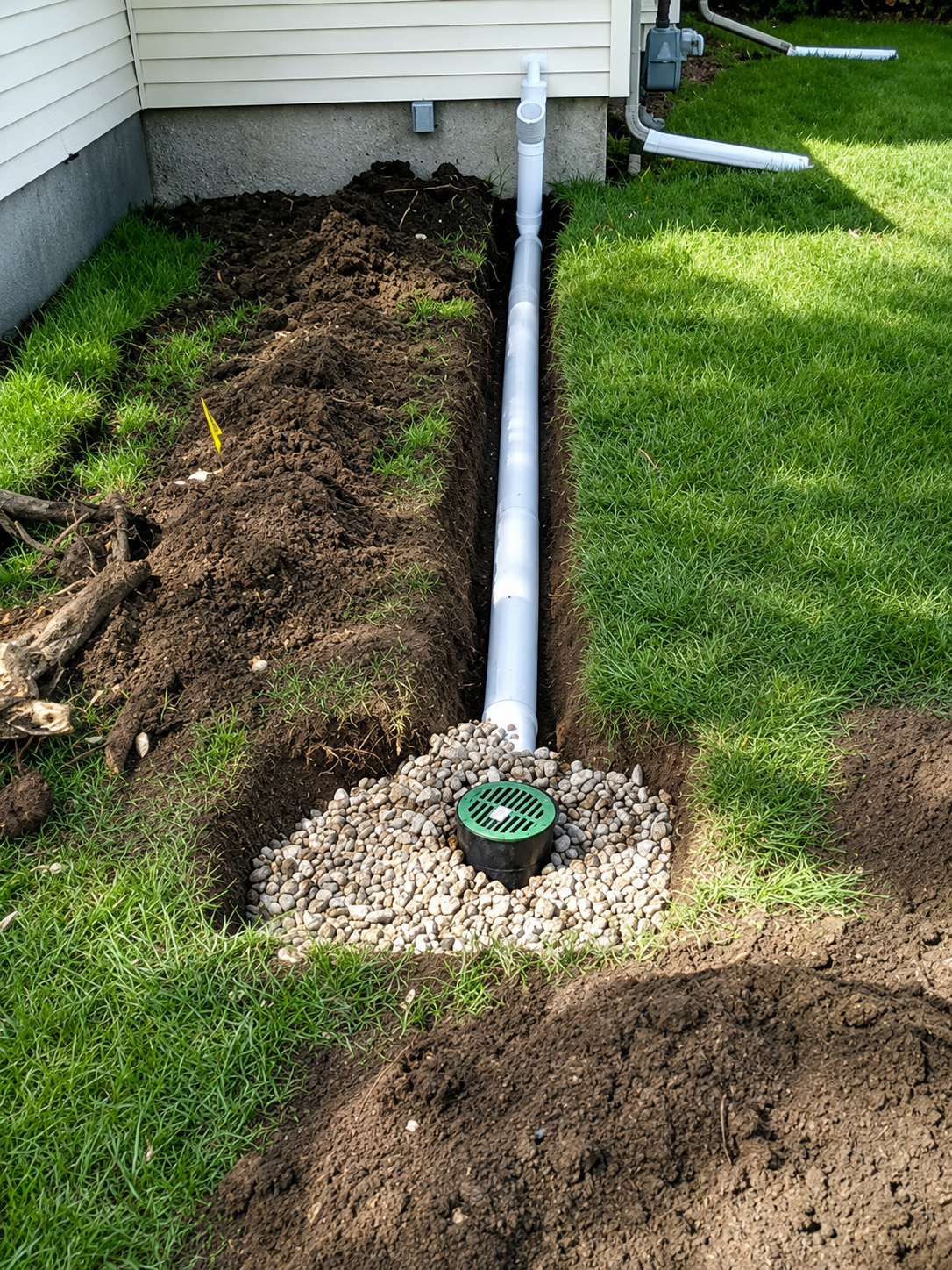
BELOW GRADE
Drain Tile And Sump Lines
Perimeter tile and sump pump discharge routed away from the house instead of dumping beside it. Discharge lines get pitched and located so they do not freeze shut or recycle water straight back to the foundation.
SURFACE
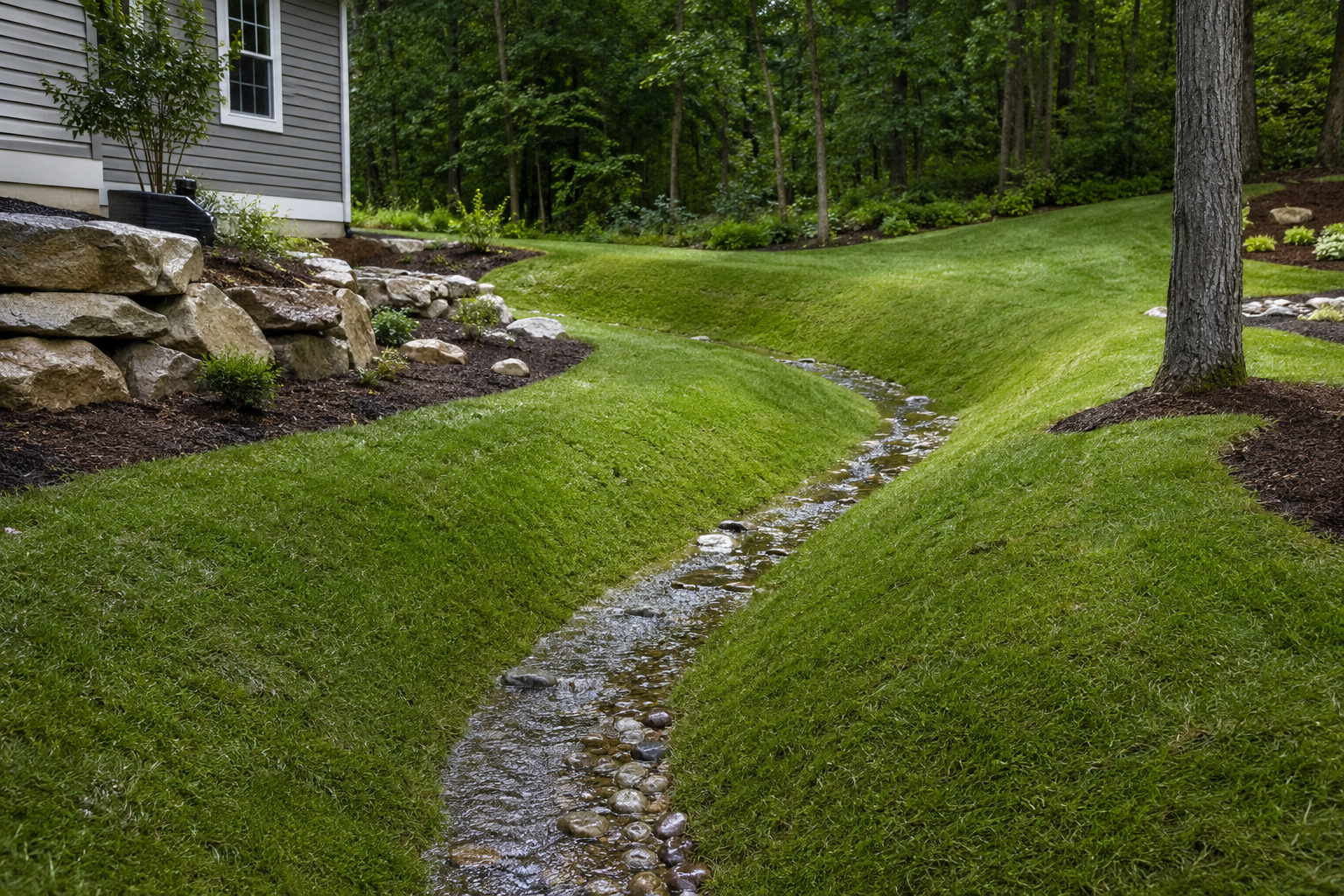
Swales And Surface Grading
Shallow shaped channels that carry sheet flow across a property without pipe. Where a yard has enough fall, a well-built swale outperforms a buried system and costs considerably less to maintain.
➜ Common Questions
FREQUENTLY ASKED QUESTIONS.
The questions we get most about standing water, wet basements and getting runoff to go somewhere sensible. Anything else can come straight through our contact page.
Why is water pooling in my yard?
Usually a low spot with nowhere to drain, soil that accepts water too slowly, or runoff being concentrated there by roofs and hard surfaces. Identifying which of those three is actually happening decides the entire approach to fixing it.
What is a French drain and how does it work?
A trench holding perforated pipe surrounded by washed rock and filter fabric. Groundwater enters through the rock, drops into the pipe and then runs downhill to an outlet, so it moves water that is already sitting in the soil.
Do I need a French drain or a dry well?
A French drain moves water somewhere else and needs a lower outlet to work. A dry well stores water and lets it soak in slowly, which is the answer on flat lots where there is nowhere lower to send it.
Where should a French drain discharge?
Somewhere downhill that daylights properly, well away from the foundation and entirely off the neighbor's property. Discharging onto adjoining land creates disputes and sometimes liability, so the outlet location matters every bit as much as the trench itself.
How deep should a French drain be?
Commonly 18 to 24 inches for yard drainage and deeper alongside a foundation, though depth follows the water rather than a rule. A consistent slope running toward the outlet matters far more than hitting any one particular depth on the tape.
Can drainage work fix a wet basement?
Very often, yes. Roof water and surface water saturating soil against the wall cause most seepage, so extending the downspouts, correcting the grade and adding drainage outside frequently solves the whole thing without any interior work at all.
Do downspout extensions actually make a difference?
They make an enormous one. Complete Yard Care Company routinely fixes chronic wet spots around Sauk Rapids, MN by carrying roof discharge 10 feet or more away from the wall before it is ever allowed to touch soil.
Will a buried drain freeze in a Minnesota winter?
Properly installed lines drain empty and stay clear, so there is nothing inside to freeze. Trouble comes from flat runs that hold water, outlets buried under snow, or sump discharge lines that were never pitched correctly to begin with.
➜ HOW WE WORK
FROM STANDING WATER TO A CLEAR OUTLET, HERE IS HOW.
STEP 01
Walk It Wet If We Can
The most useful visit happens during or shortly after rain, when the path is visible. Where that is not possible, silt lines, moss, ruts and stressed turf tell most of the same story.
STEP 02
Find Where The Water Comes From
Roofs, driveways, neighboring grade and groundwater all contribute differently. Sorting out how much volume comes from each source decides whether the answer is surface routing, buried pipe or simply better downspout work.
STEP 03
Test The Soil And The Fall
Percolation rate and available slope determine what is even possible. A dry well makes no sense in tight clay, and a French drain makes no sense at all without a lower point to reach.
STEP 04
Design To A Real Outlet
Every system needs somewhere for water to end up, and that endpoint gets identified before anything is dug. Drainage without a clearly defined outlet simply relocates the problem a short distance across the yard.
STEP 05
Locate Utilities And Install
Gopher State One Call marks the site first. Trenches get cut to consistent slope, pipe bedded in washed rock, fabric wrapped correctly and inlets set at the actual low points rather than nearby.
STEP 06
Restore And Verify Flow
We run water through the finished system while we are still on site, confirm it reaches the outlet, then restore turf and grade. Nobody should be waiting for a storm to find out.
➜ GET YOUR FREE ESTIMATE
SHOW US WHERE IT PUDDLES, AND WE WILL PRICE THE FIX, FREE.
Send us photos taken during a rain if you have them, along with a note on where the water sits. We will walk the property, trace the source, and quote the solution at no charge.
WHAT YOUR DRAINAGE QUOTE COVERS:
- Source of the water identified
- Soil and slope checked on site
- Outlet location confirmed first
- Pipe, rock and fabric specified
- Turf restoration included
- A written estimate at no cost